Annapurna Base Camp
0 wishlisted0 done
Sign in to save this trek to your list.
Is This Trek for You?
Choose Annapurna Base Camp if you want a classic Himalayan experience with reliable teahouses, dramatic mountain scenery, and no technical climbing. It suits fit first-time trekkers who can manage several steep walking days; it is less suitable if you need short days, low altitude, or quiet trails in peak season.
Overview
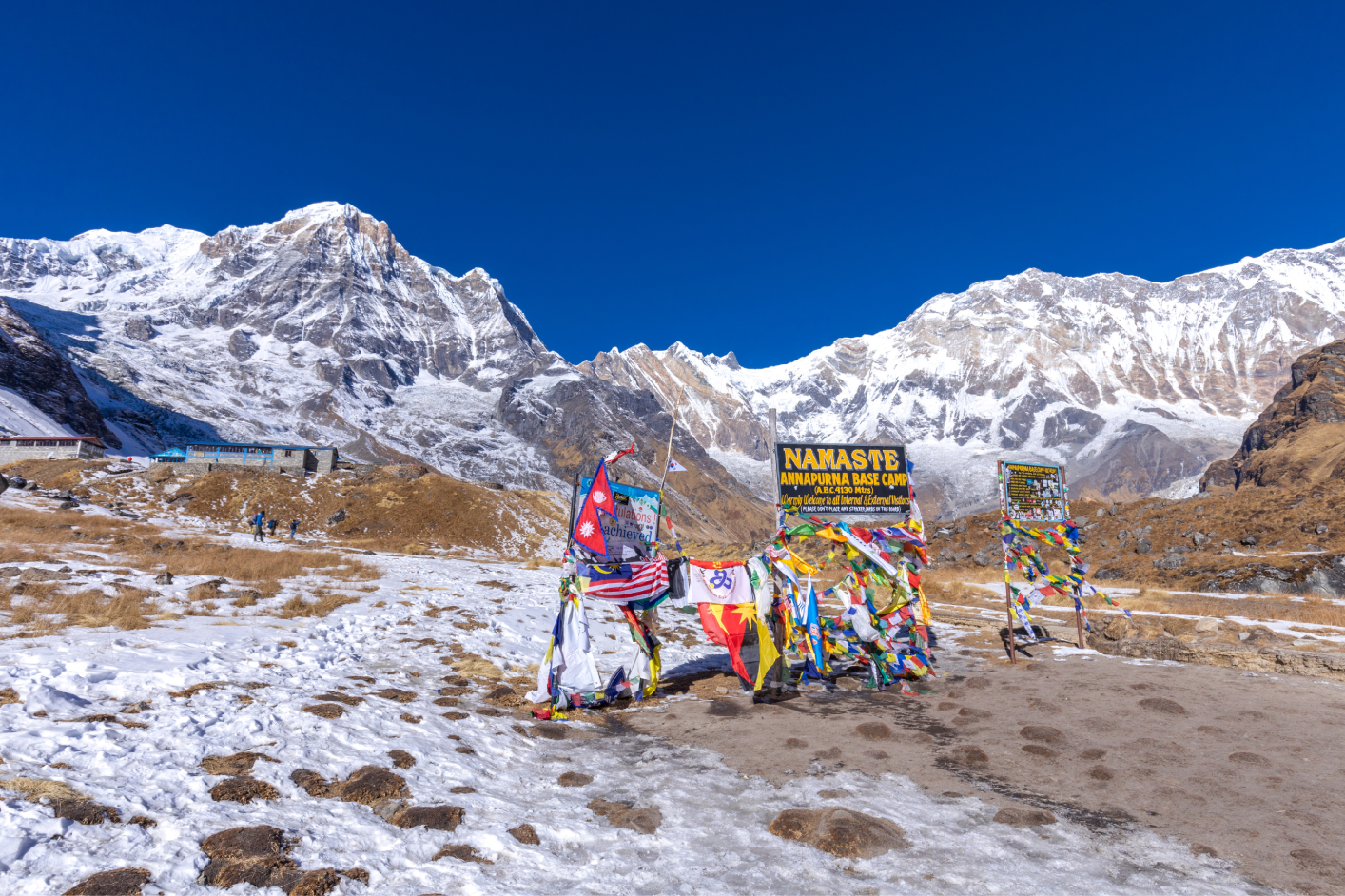
The Annapurna Base Camp trek leads into one of the most extraordinary sights in the Himalaya: a hidden, glacier-carved amphitheater ringed by sheer walls of rock and ice. At 4,130m you stand in a natural bowl with the south face of Annapurna I (8,091m) looming above, the sharp twin summit of sacred Machapuchare beside it, and Annapurna South and Hiunchuli closing the circle. Few places in Nepal put you so close to so many great peaks in a single view.
The route begins in the subtropical Modi Khola valley and climbs through terraced hillsides, rhododendron forest, and alpine meadows before the trail narrows into the gorge of the Modi Khola and climbs into the sanctuary itself. Along the way are teahouse villages, the famous stone staircases of Ulleri, a possible Poon Hill sunrise, and the hot springs of Jhinu Danda on the way back down.
Because the trail is entirely supported by teahouses, Annapurna Base Camp is an accessible high-altitude trek for fit first-timers. The practical base of Pokhara, a well-maintained route, and reliable lodges to the very summit of the trek make it one of the best introductions to walking in Nepal’s mountains. The payoff, a night inside one of the great mountain amphitheaters of the Himalaya, is unforgettable.
Route & Key Stops
The Modi Khola Valley: The Gateway
From Pokhara, a 1.5-2 hour drive brings you to the trailhead at Nayapul (1,070m). Following the Modi Khola river upstream, the path passes through Birethanti, where the ACAP permit and TIMS card are checked, then on to Tikhedhunga (1,540m) on a gentle first day beside stone-walled fields and village teahouses.
Ulleri & Ghorepani: The Staircase
The climb from Tikhedhunga begins with the famous Ulleri staircase, roughly 3,300 stone steps that rise steeply through rhododendron forest. Beyond the village of Ulleri (2,070m), the trail continues up through forest to Ghorepani (2,860m), a lively ridge-top settlement that is the base for a pre-dawn Poon Hill (3,210m) sunrise. On clear mornings the view sweeps across Dhaulagiri to the Annapurna range.
Tadapani & Chhomrong: The Last Village
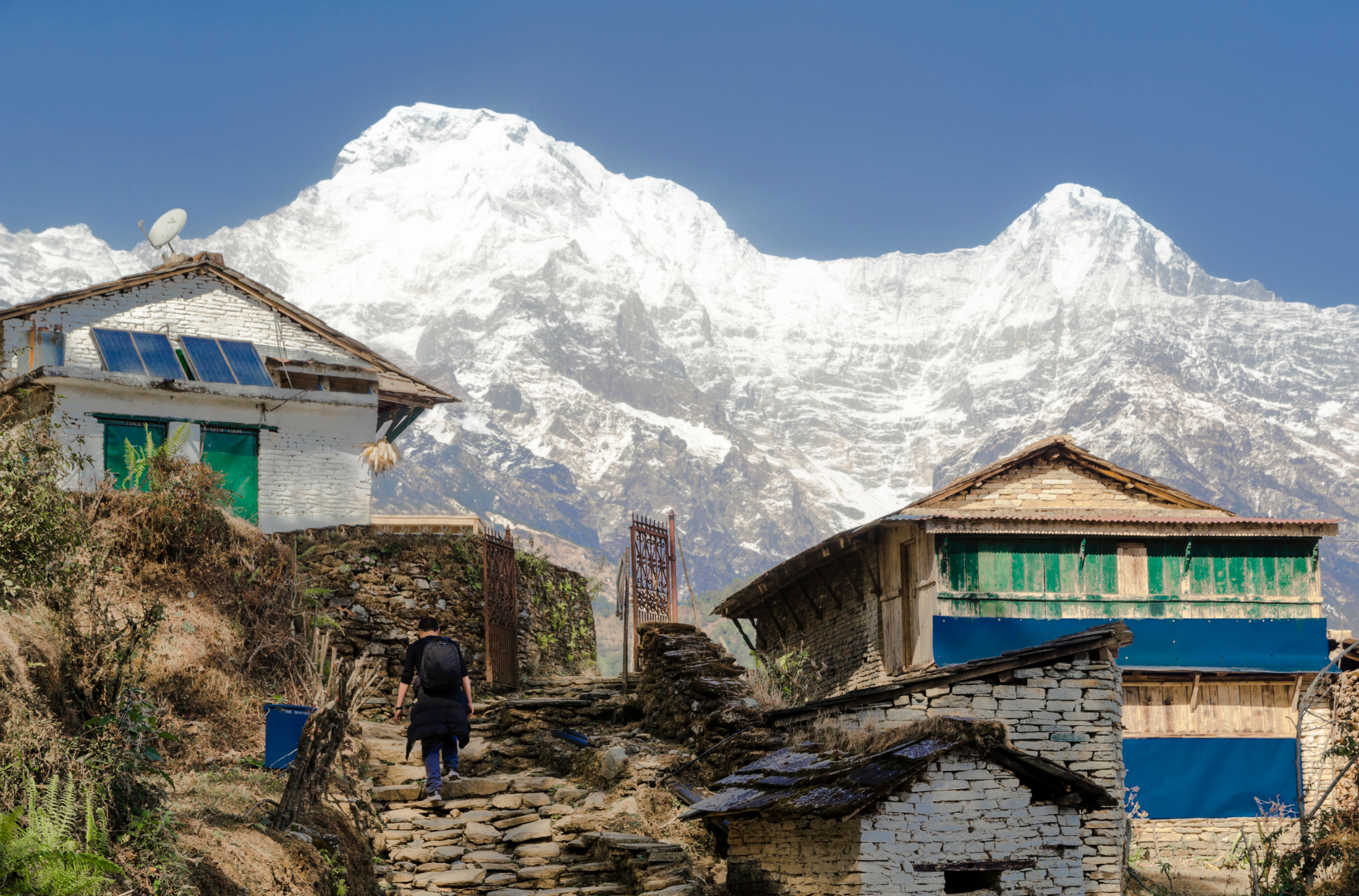
From Ghorepani the trail drops into forest and climbs again to Tadapani (2,630m), passing beneath moss-draped trees with occasional glimpses of Machapuchare. Descending through more forest, you reach Chhomrong (2,170m), the last village on the route and one of the most photogenic in Nepal, with its stacked stone houses and rooftop views of the Fish Tail peak. Below Chhomrong a long staircase drops to a suspension bridge over the Modi Khola; the climb back out on the far side is a reminder that the valley-floor heat is behind you.
Bamboo to Deurali: The Gorge
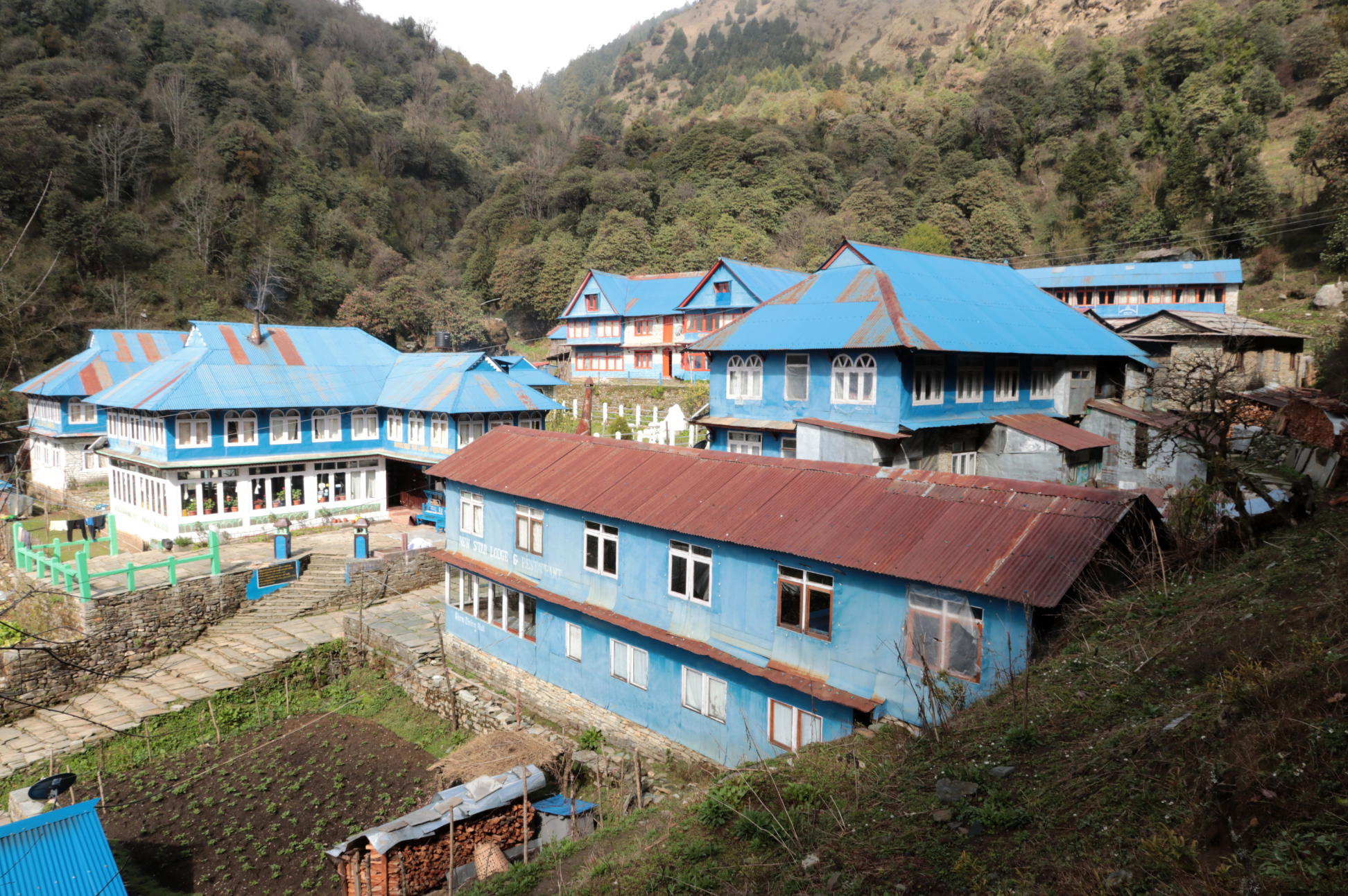
Past the bridge the trail enters the rhododendron and bamboo forest of the gorge. You pass Sinuwa (2,340m), then Bamboo (2,335m), both small clusters of lodges deep in the trees. The valley narrows as you climb to Dovan (2,600m) and steady switchbacks bring you to Deurali (3,230m), where the trees give way to alpine scrub and the valley opens to the high peaks above.
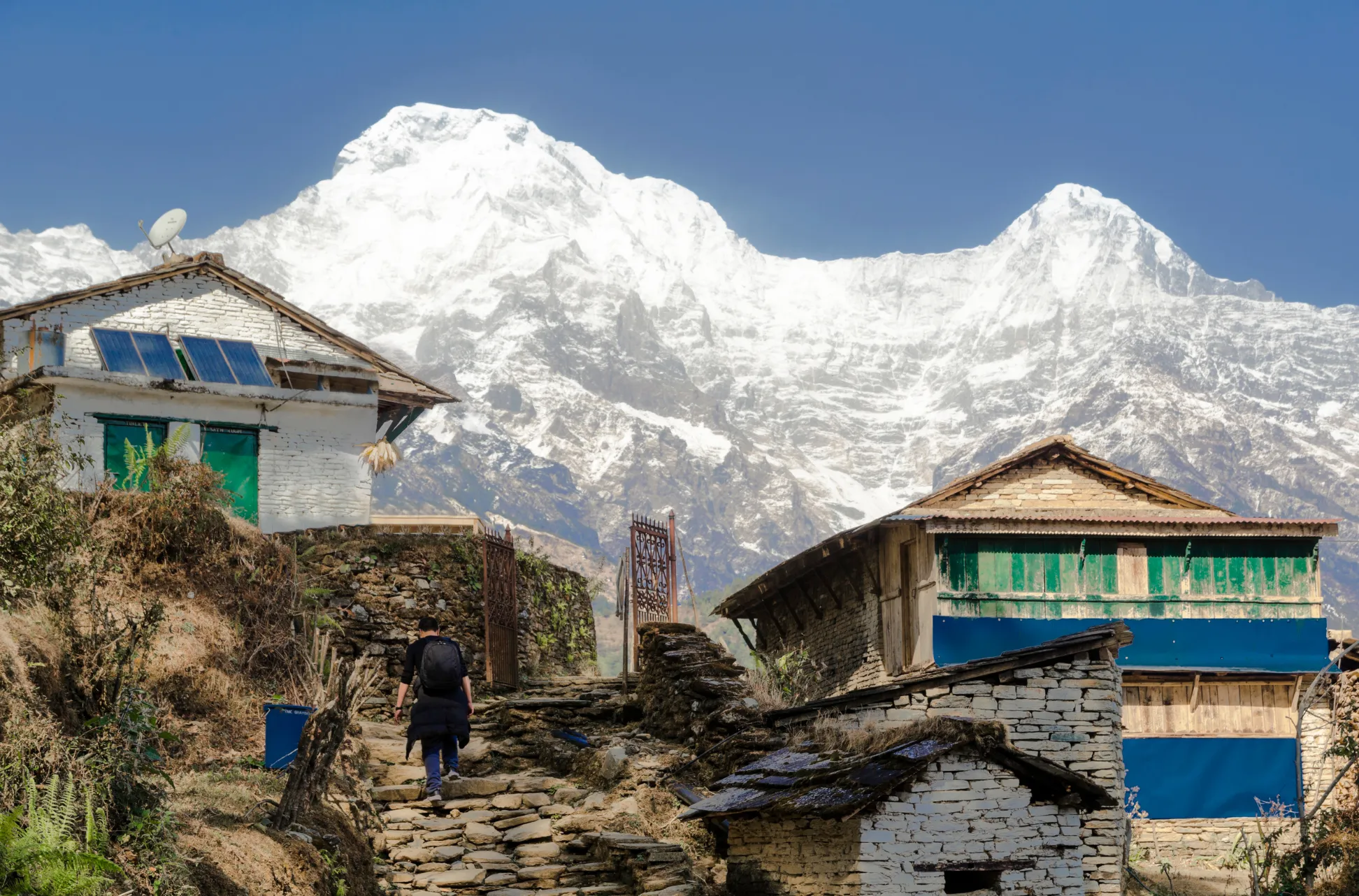
Machapuchare Base Camp: The Alpine Approach
Above Deurali the glacial valley widens, flanked by the moraine of the Modi Khola glacier and the grass slopes below Annapurna South and Hiunchuli. Machapuchare Base Camp (3,700m) occupies an open bench with direct views up the valley toward the base of the sacred mountain. From here the trail climbs a long, gentle glacial ramp toward the final camp.
Annapurna Base Camp: The Amphitheater
Annapurna Base Camp (4,130m) is the trek’s destination, a cluster of teahouses set inside a vast cirque. The camp is ringed on three sides by rock walls and glaciers: Annapurna I rears up beside the glacial bowl, Annapurna South and Hiunchuli guard the southern entrance, and Machapuchare’s double summit closes the view to the southeast. Sunrises here set the entire amphitheater alight, one peak after another catching the first light.
Itinerary
1Nayapul to Tikhedhunga
From Nayapul, follow the Modi Khola upstream through Birethanti and beside terraced fields to Tikhedhunga. Arrange and carry the required permits before leaving Pokhara; confirm current checkpoint procedure with your agency. This is a moderate first walking day.
2Tikhedhunga to Ghorepani
Climb the 3,300 stone steps of the Ulleri staircase through rhododendron forest, then continue uphill to the ridge-top village of Ghorepani. The day covers steady elevation gain; set an easy pace and enjoy the forest.
3Poon Hill Sunrise, Ghorepani to Tadapani
Optional pre-dawn ascent of Poon Hill (3,210m) for sunrise over Dhaulagiri and the Annapurnas. After breakfast descend through forest to Deurali and climb again to Tadapani, with views of Machapuchare along the way.
4Tadapani to Chhomrong
Descend through mossy forest to the Chhomrong Khola, then climb to the ridgeline village of Chhomrong. Settle in early for sunset views of Machapuchare and wander the terraced lanes of Nepal’s most photographed hill village.
5Chhomrong to Bamboo
Drop to a suspension bridge over the Modi Khola, then climb the long staircase to Sinuwa. Continue through bamboo and rhododendron forest to Bamboo, deep in the gorge, where the air is warm and the forest dense.
6Bamboo to Deurali
Climb steadily through Dovan and increasingly open valley scenery. Tree cover thins as you approach Deurali, where the gorge opens to alpine scrub and the mountains appear overhead. Your first real taste of the high valley.
7Deurali to Machapuchare Base Camp
Leave the forest behind and walk the widening glacial valley toward the base of Machapuchare. The trail passes small moraine streams and offers close views of Hiunchuli and Annapurna South. Overnight at Machapuchare Base Camp.
8Machapuchare Base Camp to Annapurna Base Camp
Ascend the gentle glacial ramp into the amphitheater. Arrive early at Annapurna Base Camp, drop your pack, and walk the camp bowl as the afternoon light rakes across the south face of Annapurna I and Machapuchare. This is the moment the trek is famous for.
9ABC to Jhinu Danda
Pre-dawn sunrise in the amphitheater, then descend the glacial ramp to MBC and continue all the way down through Deurali, Bamboo, and Chhomrong to the hot springs of Jhinu Danda. A soak in the natural pools by the river is the perfect end to a long day.
10Jhinu Danda to Nayapul
Follow the Modi Khola downstream past Siwai to Nayapul, completing the walking route. Arrange onward transport to Pokhara separately.
Alternative Itineraries
- Poon Hill Chhomrong loop (7-8 days): Push harder by skipping the Tadapani rest-day rhythm, joining the Poon Hill route direct to Chhomrong. Best for repeat trekkers or those short on time.
- Community Lodge Trail (nature walk): Between Chhomrong and Landruk, a less-traveled trail passes quiet communities and makes a gentle alternative descent toward Ghandruk.
- With the Annapurna Circuit (16-20 days): Combine the sanctuary with the high crossing of Thorong La and the contrasting landscapes of the Kali Gandaki valley. See our Annapurna Circuit guide for route and pass details.
Route Map
Elevation Profile
Logistics & Support
Accommodation
Teahouses line the entire route, including both high camps. Rooms are simple with twin beds and shared bathrooms, and dining rooms have wood-burning stoves where you eat a set menu. Above Chhomrong, power for charging and hot showers is limited or paid, and blankets are the norm below spring weight sleeping bags. Book ahead in October, the busiest month.
Guides & Porters
The Poon Hill–ABC route is covered by Nepal’s current guide and agency-issued TIMS requirements. Your guide arranges permits, books teahouses, and handles navigation. Porter capacity and rates vary by agency and season.
Permits
- ACAP permit: NPR 3,000 for foreigners (~$23). Issued in Kathmandu, Pokhara, or at the checkpoint.
- Agency-issued TIMS card: NPR 2,000 for non-SAARC trekkers on the combined Poon Hill–ABC route listed by Nepal Tourism Board.
Carry required documents throughout the trek. Confirm the current checkpoint process with your registered agency.
Budget
| Item | Cost |
|---|---|
| Permits | ~$38-40 |
| Guide | $25-40/day |
| Porte | $20-30/day |
| Teahouse room | $5-15/night |
| Meals | $5-10/meal |
| Pokhara transport | $10-30 one way |
| Daily budget | $40-70/day |
Getting There and Back
Getting to the trailhead: Reach Pokhara from Kathmandu by road or air. From Pokhara, a private vehicle or local bus takes about 1.5-2 hours to Nayapul, the starting point for this itinerary.
Returning from the trail: Arrange a vehicle from Nayapul back to Pokhara after the final walk. Add onward travel time and a buffer before any international departure.
Weather & Seasons
The best seasons are Autumn (September-November) and Spring (March-May).
| Season | Conditions |
|---|---|
| Autumn (Sep-Nov) | Clearest skies and the most reliable conditions; peak crowds on the lower trail |
| Spring (Mar-May) | Warmer days, rhododendron blooms at lower elevations, some haze in the valley |
| Winter (Dec-Feb) | Cold nights at ABC (-15°C), snow above Bamboo, but often clear and uncrowded |
| Monsoon (Jun-Aug) | Heavy rain and mud, cloud on the peaks, leeches below 2,000m; not recommended |
Autumn gives the best chance of clear, stable weather and sunrise views in the amphitheater. Spring offers lush, blooming forest and milder temperatures but more valley haze. Winter is a genuine cold-weather trek with snow on the upper trail, while the monsoon season blankets the peaks in cloud and turns the gorge slippery.
Tips
- Plan the final night at ABC for good weather. If forecasts look unsettled, pull the sunrise stage forward a day to Machapuchare Base Camp so you still catch the amphitheater in clear air.
- Pack a small towel for Jhinu. The hot springs on the last night are the best reward on the route, and a quick-dry towel is invaluable.
- Walk the Poon Hill sunrise. The extra pre-dawn climb on day three is famous for a reason; Dhaulagiri and the Annapurna wall light up before the circuit morning crowds.
- Acclimatize by pacing, not resting. The route gains altitude steadily with strong daily climbs. Walk slowly, sleep low where possible, and drink plenty of water.
- Book teahouses in October. The busiest month fills every lodge from Chhomrong upward; a guide handles bookings so you can relax.
- Bring Nepali rupees in small denominations. Wi-Fi, charging, hot showers, and bottled water cost extra above Chhomrong, and ATMs are limited to Pokhara and Kathmandu.
- Respect the sanctuary. Carry out all trash, stay on the trail, and use the toilet facilities at the teahouses to keep the amphitheater pristine.
- Build a buffer day in Pokhara. Weather can delay mountain flights and road mudslides in the monsoon; give yourself a cushion before any onward travel.
Frequently Asked Questions
Planning
When is the best time to go?
The best seasons are Spring (March-May) and Autumn (September-November). Autumn offers the clearest skies for views of the Annapurna amphitheater, while Spring brings rhododendron blooms on the lower trails. Winter is cold but often clear, and the monsoon season is muddy with regular cloud cover.
How many days do I need?
The itinerary shown takes 10 days on foot, including the Poon Hill section. Allow separate time for travel between Pokhara and the trailhead, and onward travel after the walk. Variants, pace and overnight stops can change the number of trekking days.
Can I combine this with the Poon Hill trek?
Yes. The classic route to Annapurna Base Camp passes through Ghorepani and near Poon Hill. See our Poon Hill trek guide for a shorter itinerary and route details.
Where does the trek start?
The trailhead is at Nayapul, about a 1.5-2 hour drive from Pokhara. Pokhara is reached by bus, flight, or tourist coach from Kathmandu (about 6-7 hours by road, or a 25-minute flight).
Difficulty & Altitude
How hard is the trek?
Moderate. The trails are well-maintained and the altitude is manageable for a first Himalayan trek, but the daily elevation gains are steady and the final climb above Machapuchare Base Camp is at altitude. Good fitness and prior hill-walking experience help.
What about altitude sickness?
The itinerary is well-paced, with overnight stops at 2,860m, 3,230m, 3,700m, and 4,130m. Ascend slowly, sleep low where you can, stay hydrated, and turn around if headache, nausea, or dizziness persists. Most trekkers feel the altitude most on the final climb.
Do I need technical climbing skills?
No. The route is entirely non-technical walking on established trails, including the final stretch into the sanctuary. The main challenges are stamina, elevation, and the steep stone staircases between Tadapani and Chhomrong.
Permits & Costs
What permits do I need?
You need an Annapurna Conservation Area entry permit and, for the Poon Hill–ABC route, the agency-issued TIMS card required by Nepal Tourism Board. The current NTB fee table lists the ACAP permit at NPR 3,000 for foreign visitors. Carry the required documents; checkpoint procedures can change.
How much does it cost?
Budget varies with season, transport, guide service, and comfort level. Nepal Tourism Board currently lists ACAP entry at NPR 3,000 for foreign visitors and TIMS at NPR 2,000 for non-SAARC trekkers. Ask agencies for an itemized quote showing permits, transport, meals, accommodation, and staff costs.
Is a guide required?
Yes. The Poon Hill–ABC route is among the routes covered by Nepal's current guide and agency-issued TIMS requirements. Arrange a licensed guide through a registered trekking agency.
Route & Navigation
What is the accommodation like?
Teahouses cover the entire route through to Annapurna Base Camp. Rooms are simple with twin beds and blankets, and dining rooms have wood-burning stoves. Above Chhomrong, rooms get more basic and power charging is limited.
Is the trail crowded?
The Annapurna Base Camp trail is one of Nepal's most popular, so expect company on the Ghorepani and Chhomrong sections in peak season. The trail thins out above Bamboo and the sanctuary itself stays peaceful and dramatic.
Are the Jhinu hot springs worth it?
Yes. The natural hot pools at Jhinu Danda, beside the Modi Khola, are a perfect reward after the descent from the sanctuary. Most trekkers plan a soak on their final night before returning to Pokhara.
Best Views & Highlights
What makes Annapurna Base Camp special?
ABC sits in a natural amphitheater ringed by 360-degree walls of ice and rock. From the camp you look directly at the south face of Annapurna I (8,091m), plus Annapurna South, Hiunchuli, and the unmistakable double summit of Machapuchare.
Why is Machapuchare off limits?
Machapuchare ('Fishtail') is classified as sacred and it is forbidden to summit. The peak was climbed once in 1957, after which Nepal declared it off limits. Its pristine double summit gives the sanctuary its character.
Is the sunrise at ABC worth the early start?
Absolutely. At first light the high cirque ignites: first Annapurna I catches the sun, then the sharp pyramid of Machapuchare. It is widely described as one of the great mountain-close moments in the Himalaya.