Everest Base Camp
0 wishlisted0 done
Sign in to save this trek to your list.
Is This Trek for You?
Choose Everest Base Camp if reaching an iconic Himalayan destination matters more than solitude. You do not need climbing skills, but you do need patience for altitude, crowded trails, basic lodges, and several consecutive long days. It suits trekkers who can train consistently and build in weather and acclimatization time.
Overview
The Everest Base Camp trek is often described as a once-in-a-lifetime adventure and it lives up to its reputation. Trekking through the Himalayas lets you walk among giants, challenge yourself, and connect deeply with the legendary Sherpa culture.
The goal is the South Base Camp of Mount Everest, perched at 5,364 meters (17,598 ft) on the Nepal side. This is where climbers begin their ascent of the world’s tallest mountain, and standing here feels surreal. The trek is considered challenging because of the altitude, long walking days, and rugged paths. The itinerary shown has 11 days on the trail, with most walking days taking 5-8 hours; allow separate time for Lukla flights and weather buffers.
But EBC isn’t only about the destination — it’s the entire journey. You’ll cross suspension bridges fluttering with prayer flags, climb through valleys and high-altitude plateaus, explore ancient monasteries, and share warm meals with fellow trekkers in cozy teahouses. Every step brings something new and unforgettable.
Route & Key Stops
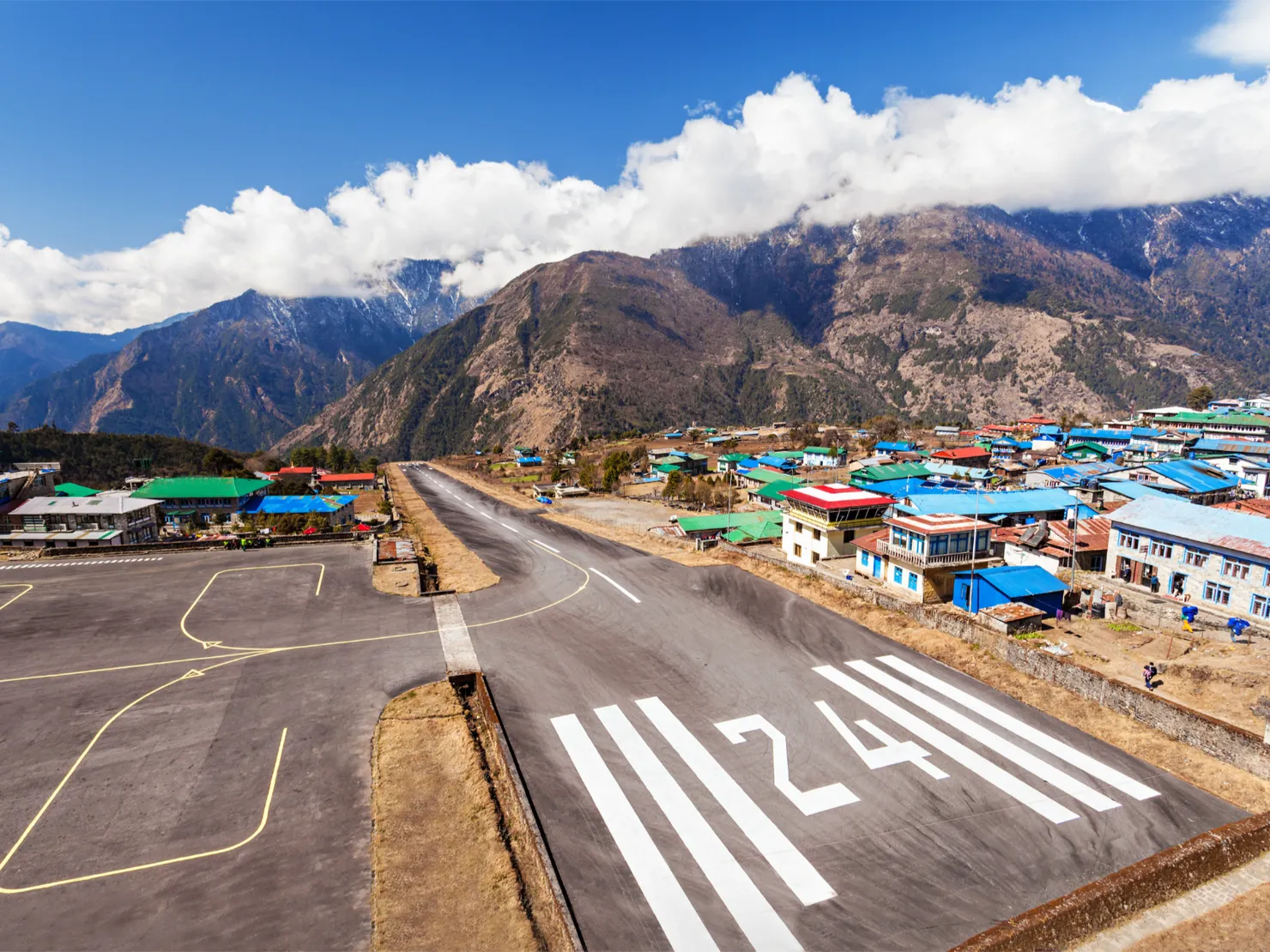
Lukla: The Starting Point
The trek begins with a scenic flight from Kathmandu (or Ramechhap during peak season) to Lukla at 2,840 m (9,317 ft). Known as the “Gateway to Everest,” Lukla marks the start of the trail along the Dudh Koshi River.
Namche Bazaar
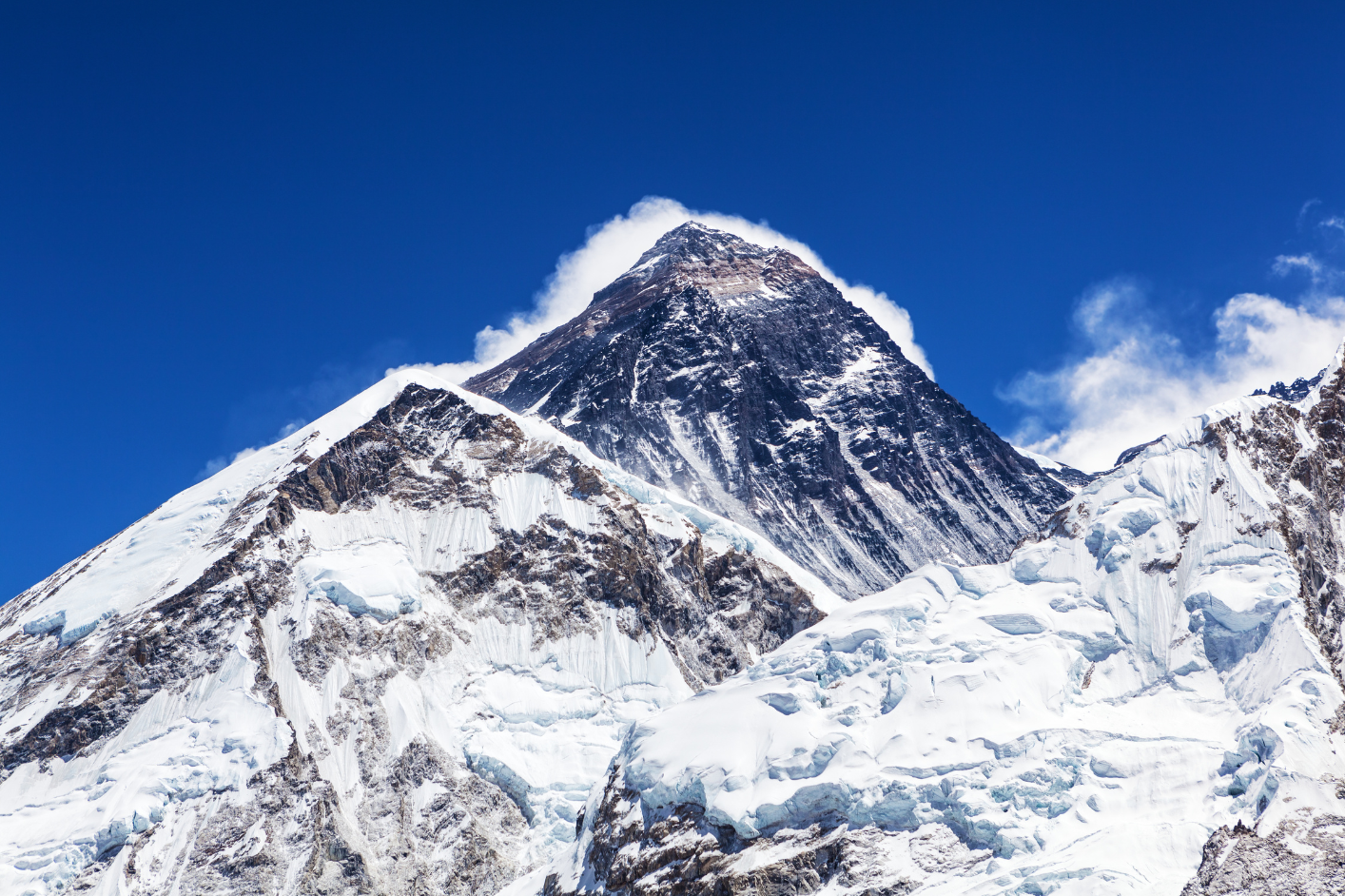
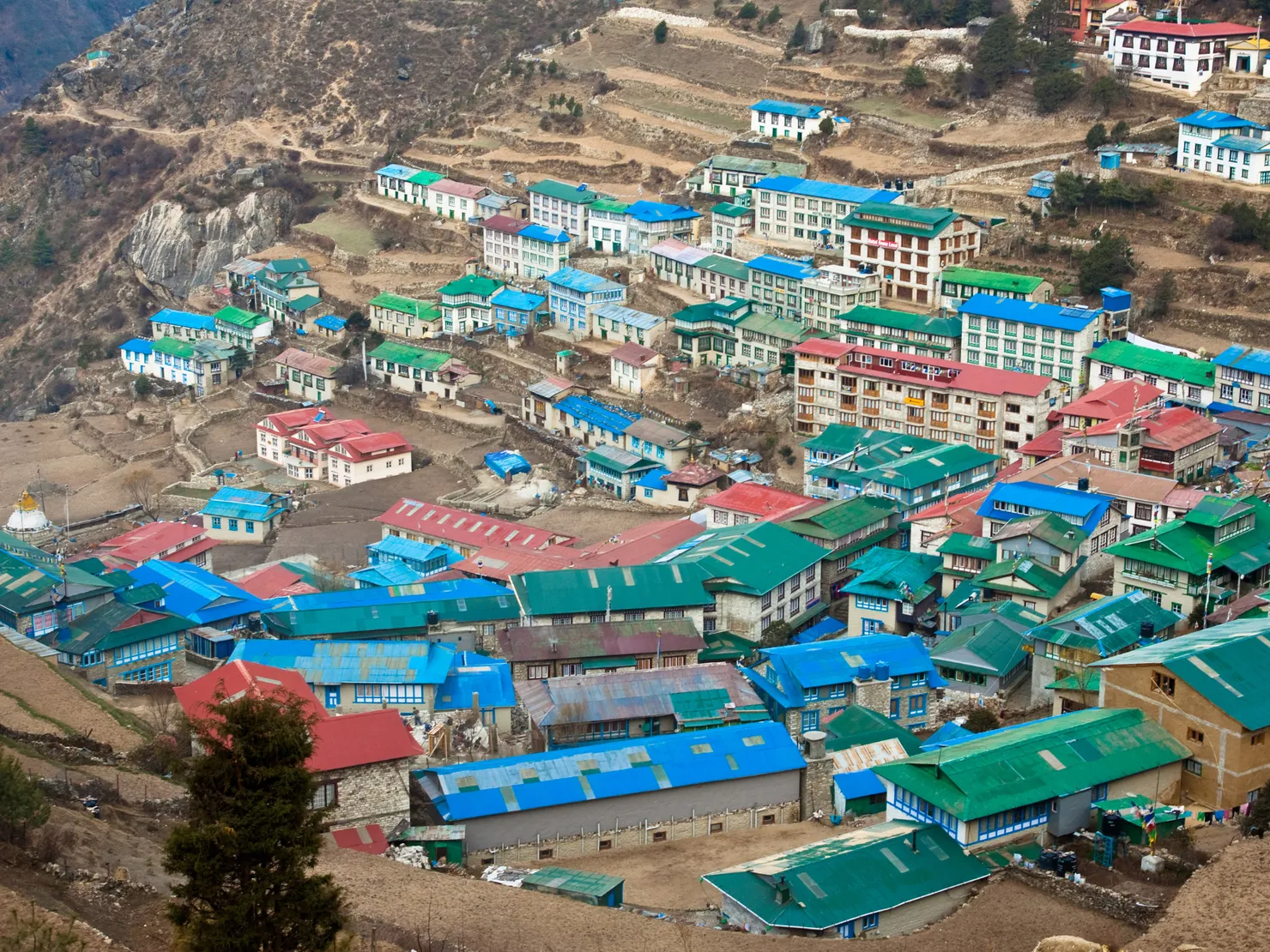
Namche Bazaar (3,440 m / 11,286 ft) is the heart of the Khumbu region. An acclimatization day here is essential. Most trekkers hike up to the Everest View Hotel for spectacular panoramas. Many catch their first glimpse of Everest on the climb to Namche.
Tengboche
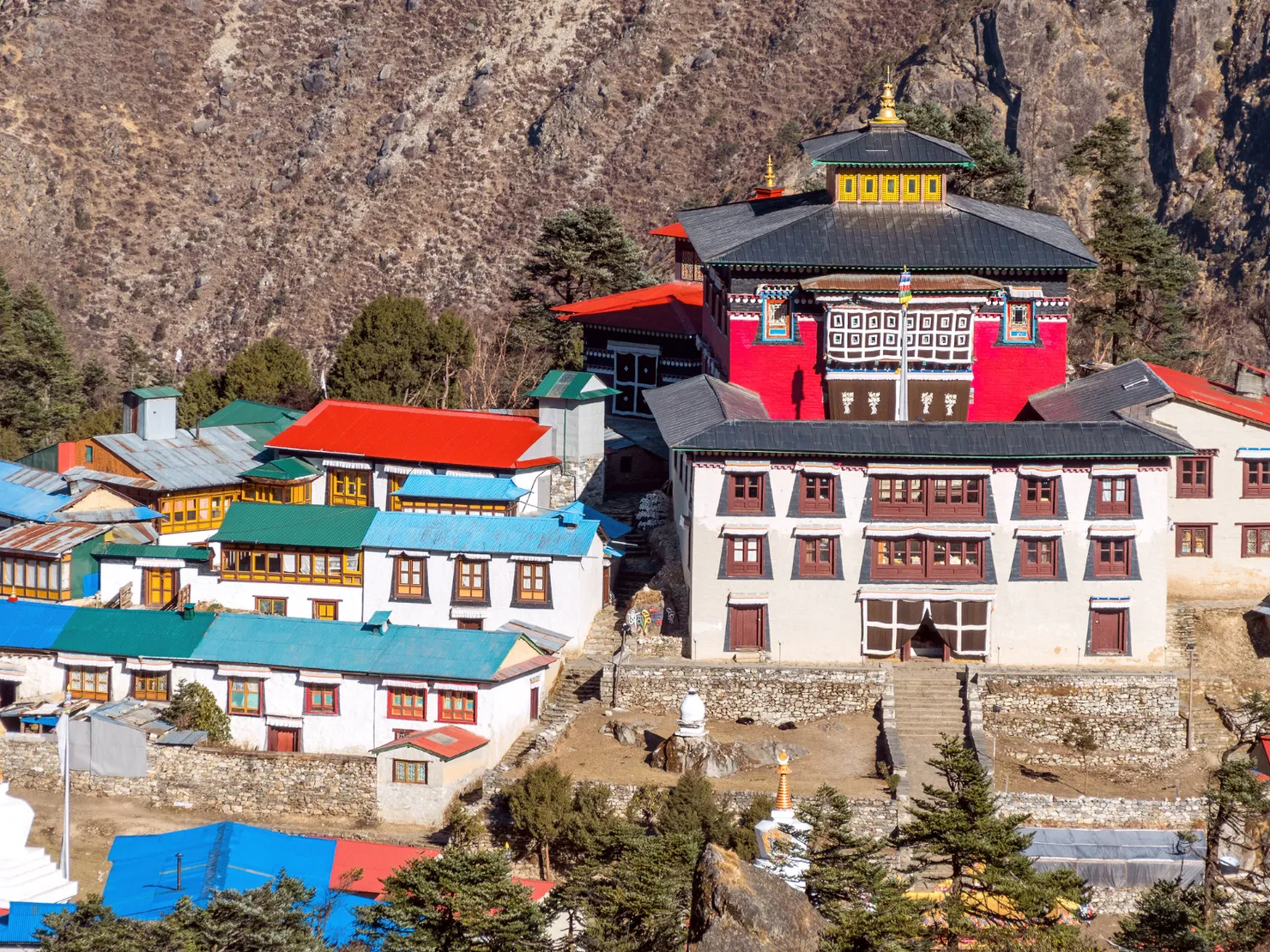
Tengboche (3,860 m / 12,664 ft) is home to the famous Tengboche Monastery, set against the jaw-dropping backdrop of Ama Dablam and other Himalayan peaks. The monastery hosts an annual Mani Rimdu festival that’s a highlight of the trekking calendar.
Dingboche
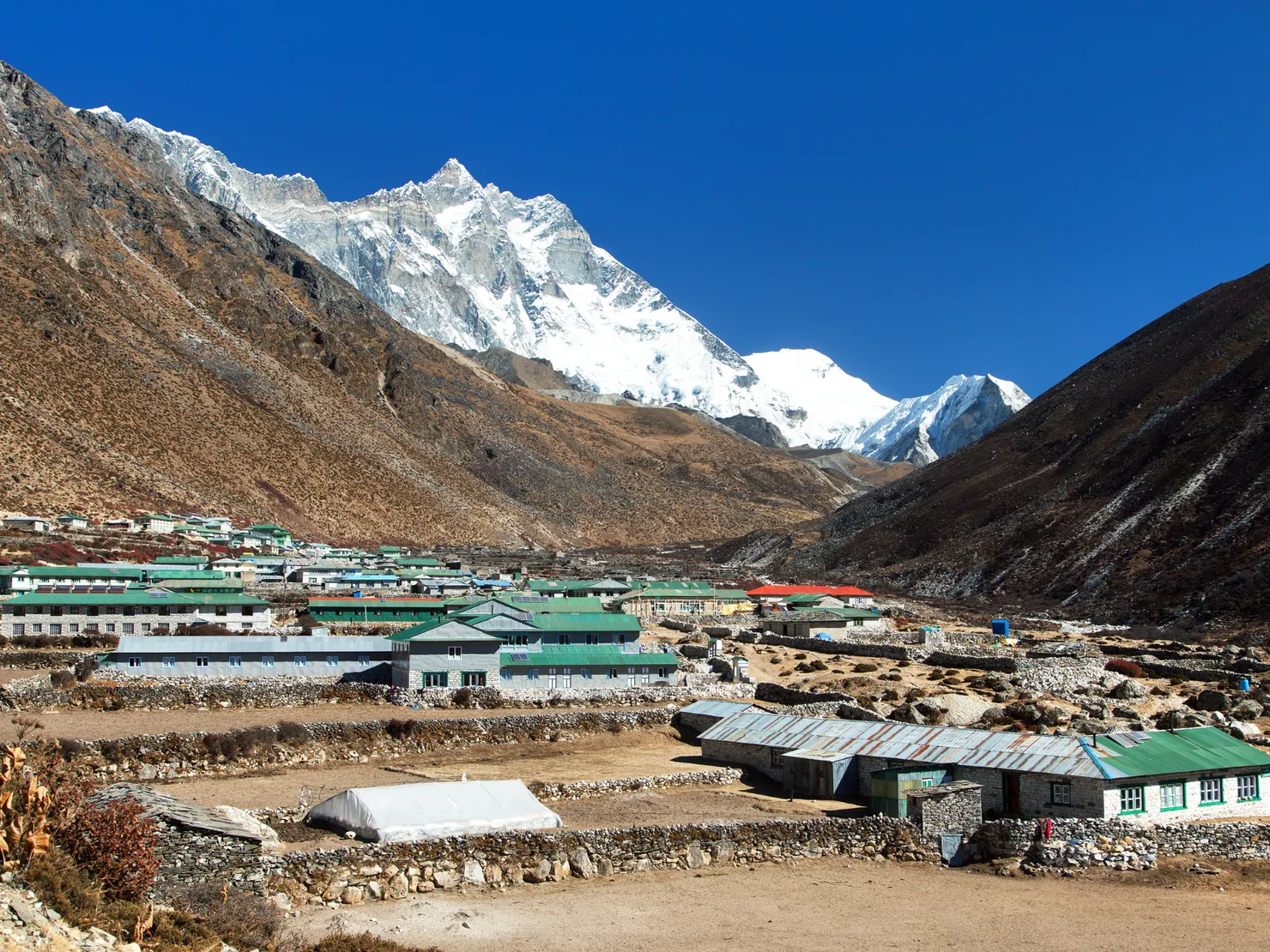
Dingboche (4,410 m / 14,469 ft) is the second major acclimatization stop. A popular hike here is to Nangkartsang Peak (5,083 m), which offers incredible views and helps you adjust to the altitude.
Gorak Shep & Base Camp
The trail continues through Lobuche to Gorak Shep (5,160 m / 16,929 ft), the last settlement before base camp.
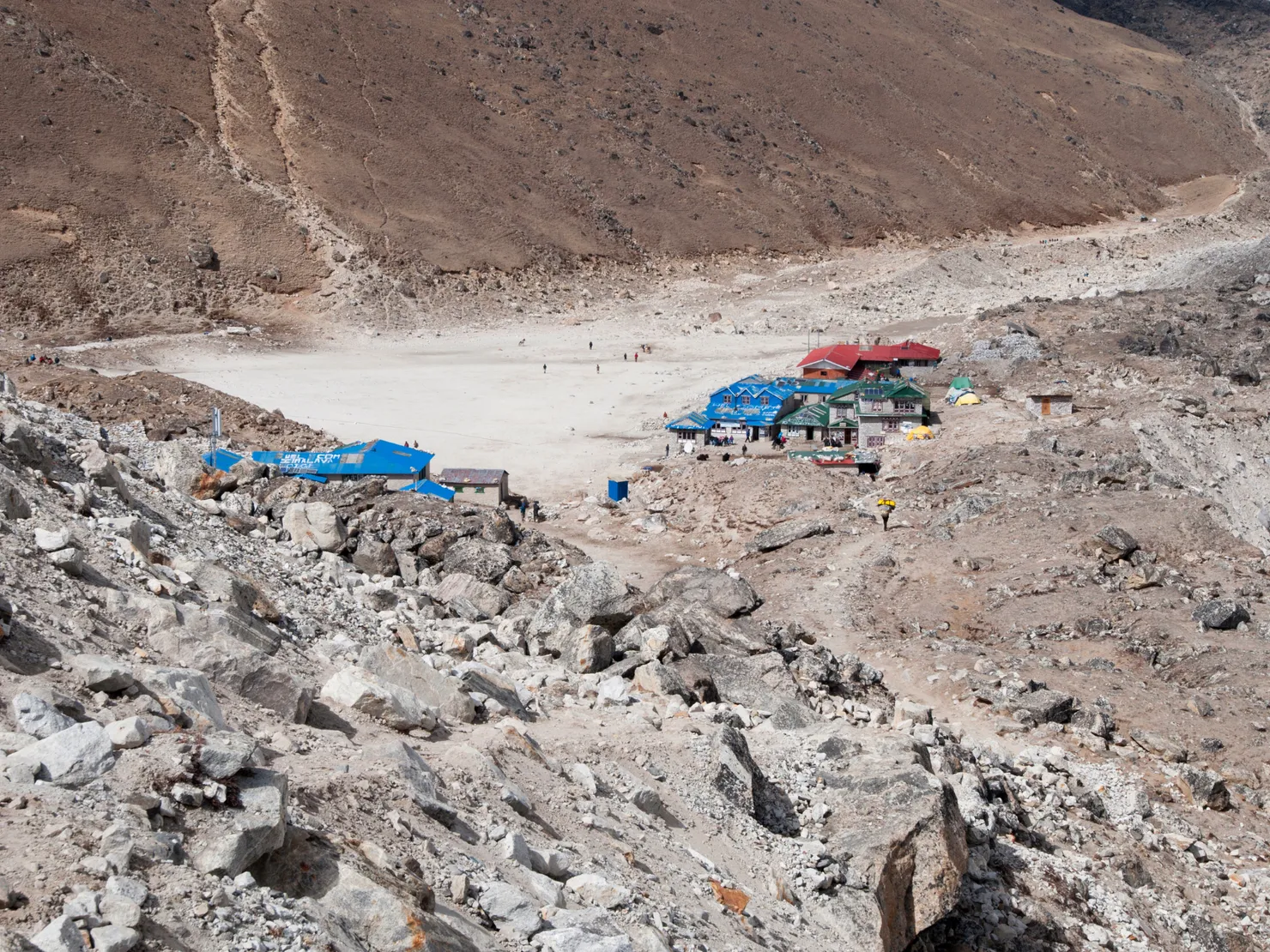
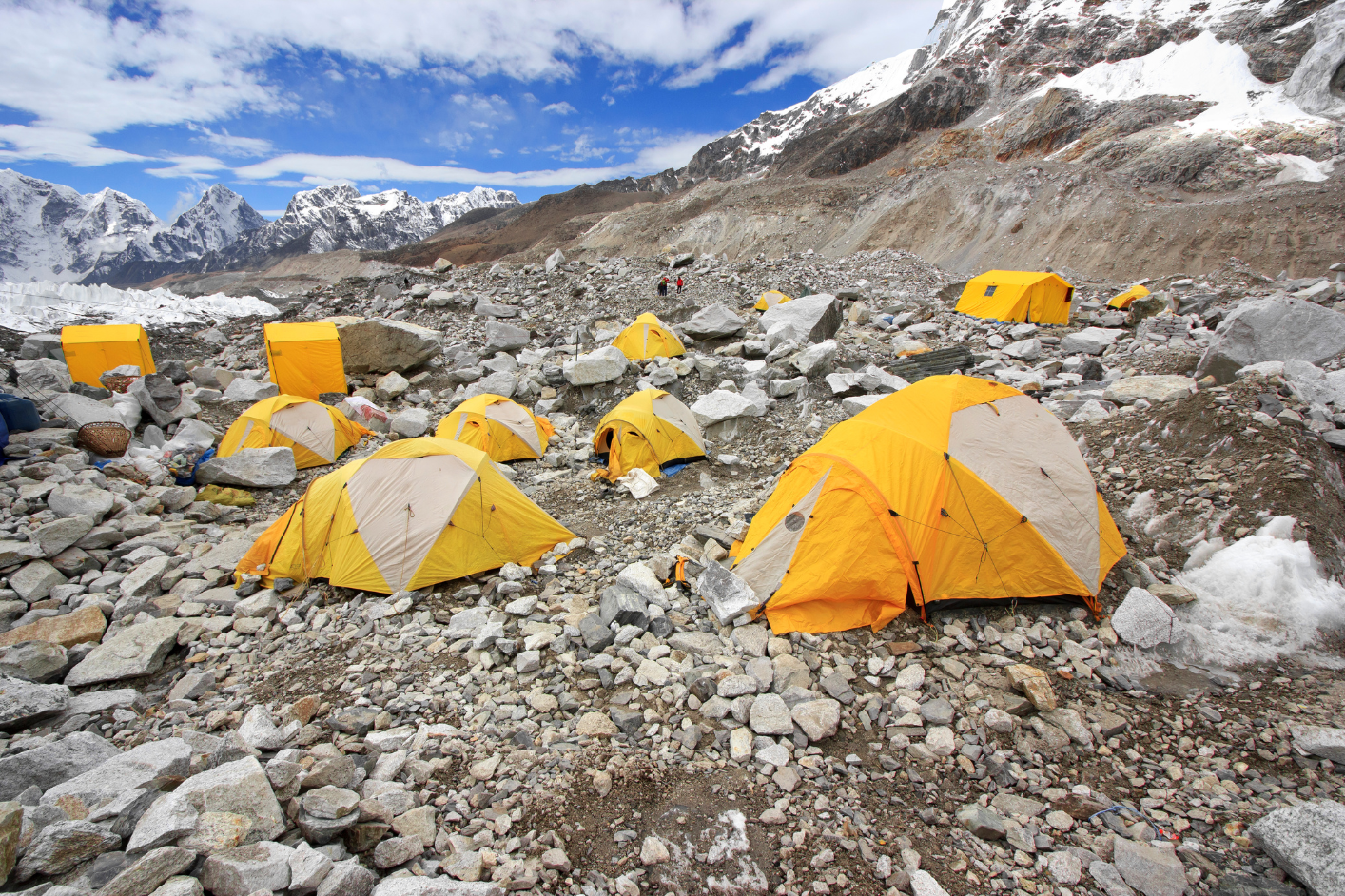
Everest Base Camp (5,364 m) — Reaching EBC is an emotional moment. You’ll see the Khumbu Icefall and, during climbing season, buzzing expedition camps, yaks, and Sherpa teams preparing their ascent.
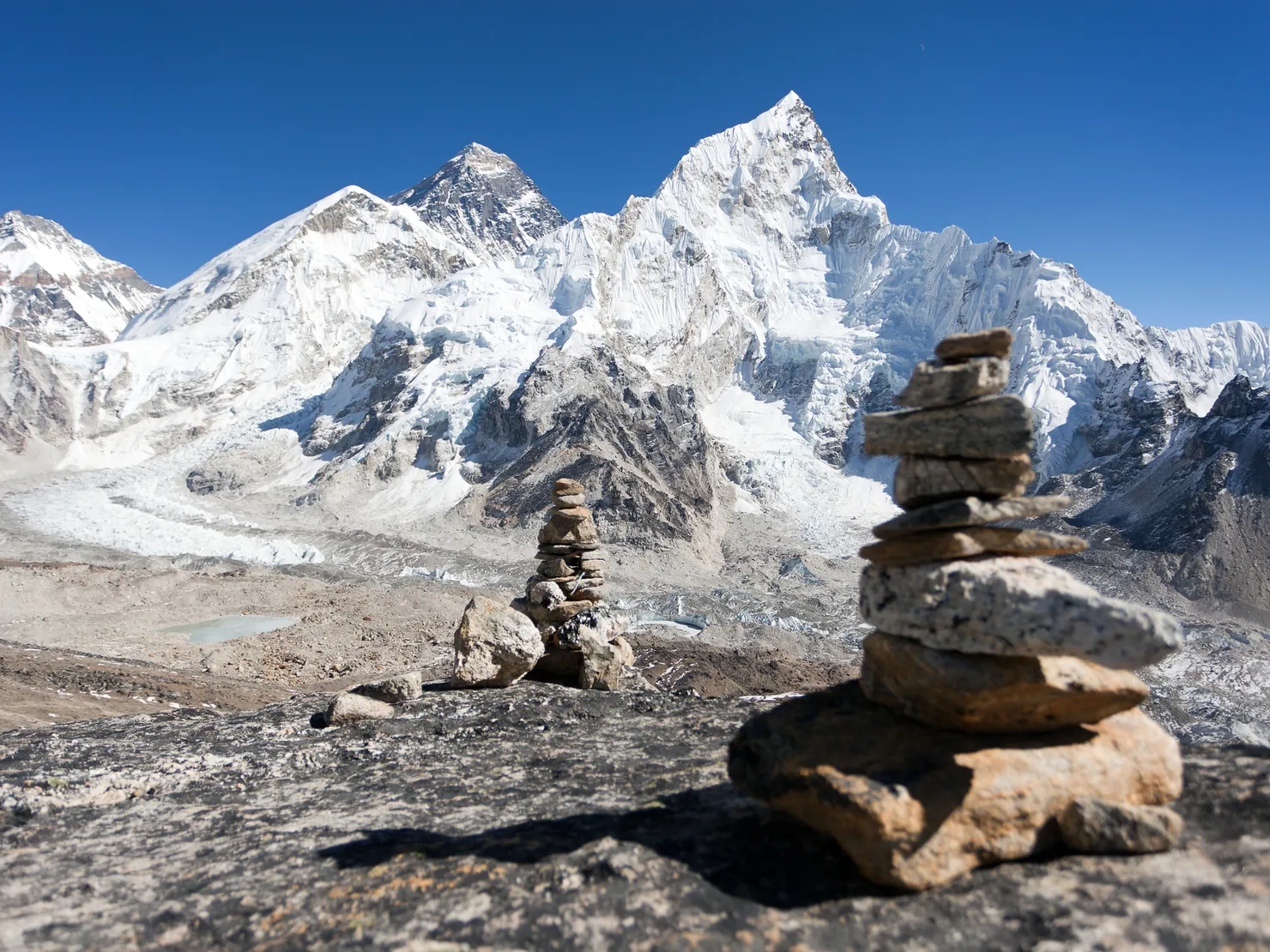
Kala Patthar (5,545 m / 18,192 ft) — The best viewpoint of Everest. Watching the first light hit Everest, Lhotse, Nuptse, and Pumori at sunrise is an experience you’ll never forget.
The Descent
The return retraces the path through Pheriche, Tengboche, and Namche before flying out of Lukla. In total, you’ll cover roughly 130 km (80 miles) on foot.
Itinerary
1Lukla to Phakding
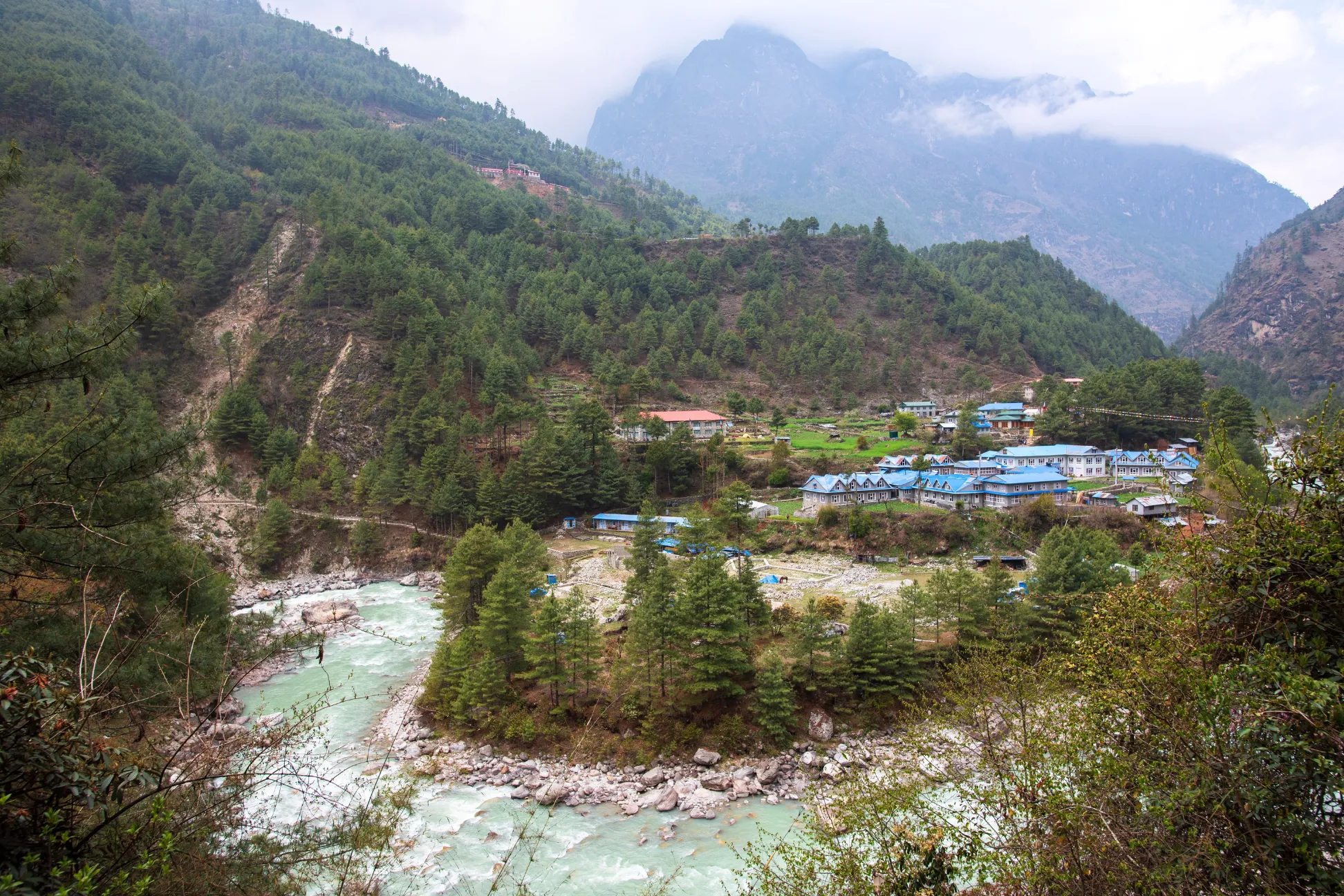
Begin walking from Lukla (2,840m). Descend through Cheplung and Ghat along the Dudh Koshi river valley. The trail is gentle with some ups and downs through pine forests and small Sherpa settlements. Overnight in Phakding.
2Phakding to Namche Bazaar
Cross the Dudh Koshi multiple times via suspension bridges. Pass through Benkar and Monjo (Sagarmatha National Park checkpoint). The final climb to Namche is steep - 600m gain in 2 hours. Namche Bazaar is the bustling heart of the Khumbu region with shops, cafes, and your first views of Everest.
3Acclimatization in Namche
A critical rest day. Hike up to the Everest View Hotel (3,880m) for panoramic views of Everest, Lhotse, and Ama Dablam. Visit the Sherpa Culture Museum and explore Khumjung village. Return to Namche for the night. Proper acclimatization here prevents altitude sickness higher up.
4Namche to Tengboche
Descend to the Dudh Koshi river and climb to Tengboche, home to the region’s most important monastery. The trail offers stunning views of Ama Dablam, Everest, and Nuptse. If timing aligns, witness the monks’ evening prayers at the monastery, a deeply moving experience.
5Tengboche to Dingboche
Descend through rhododendron forest to Debuche, cross the Imja Khola, and pass through Pangboche, home to one of the Khumbu’s historic monasteries. The trail opens into the wide Imja Valley. Dingboche sits in a sheltered valley surrounded by towering peaks.
6Acclimatization in Dingboche
Hike to Nangkartsang Peak (5,083m) for incredible views of Makalu, Lhotse South Face, and the Imja Valley. This is the highest acclimatization hike on the trek. Return to Dingboche. The extra day here is essential before pushing above 4,500m.
7Dingboche to Lobuche
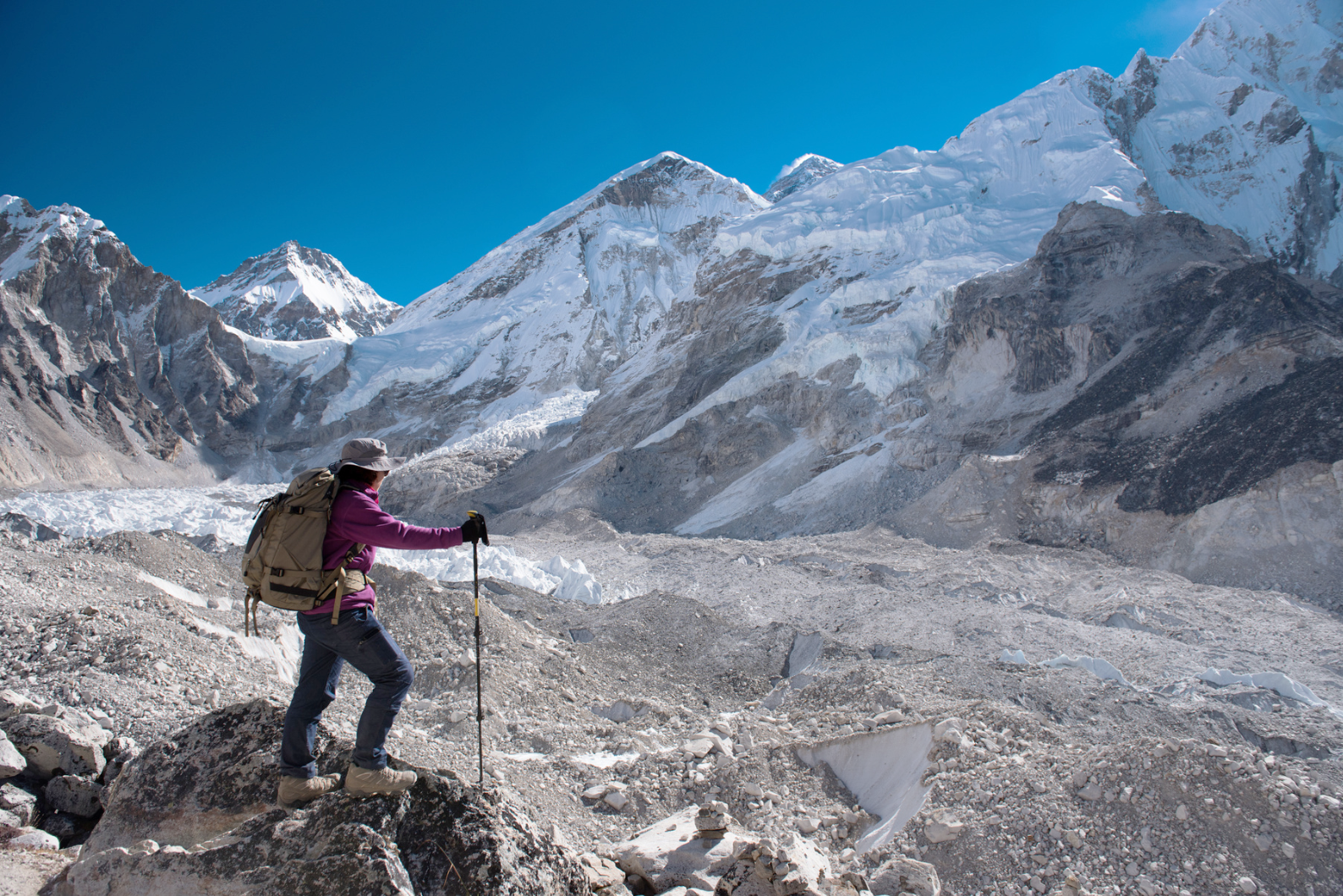
Trek through Dughla and along the lateral moraine of the Khumbu Glacier. Pass the touching mountaineering memorial cairns at Thukla dedicated to climbers lost on Everest. The landscape becomes increasingly barren and dramatic as you approach Lobuche.
8Lobuche to Everest Base Camp
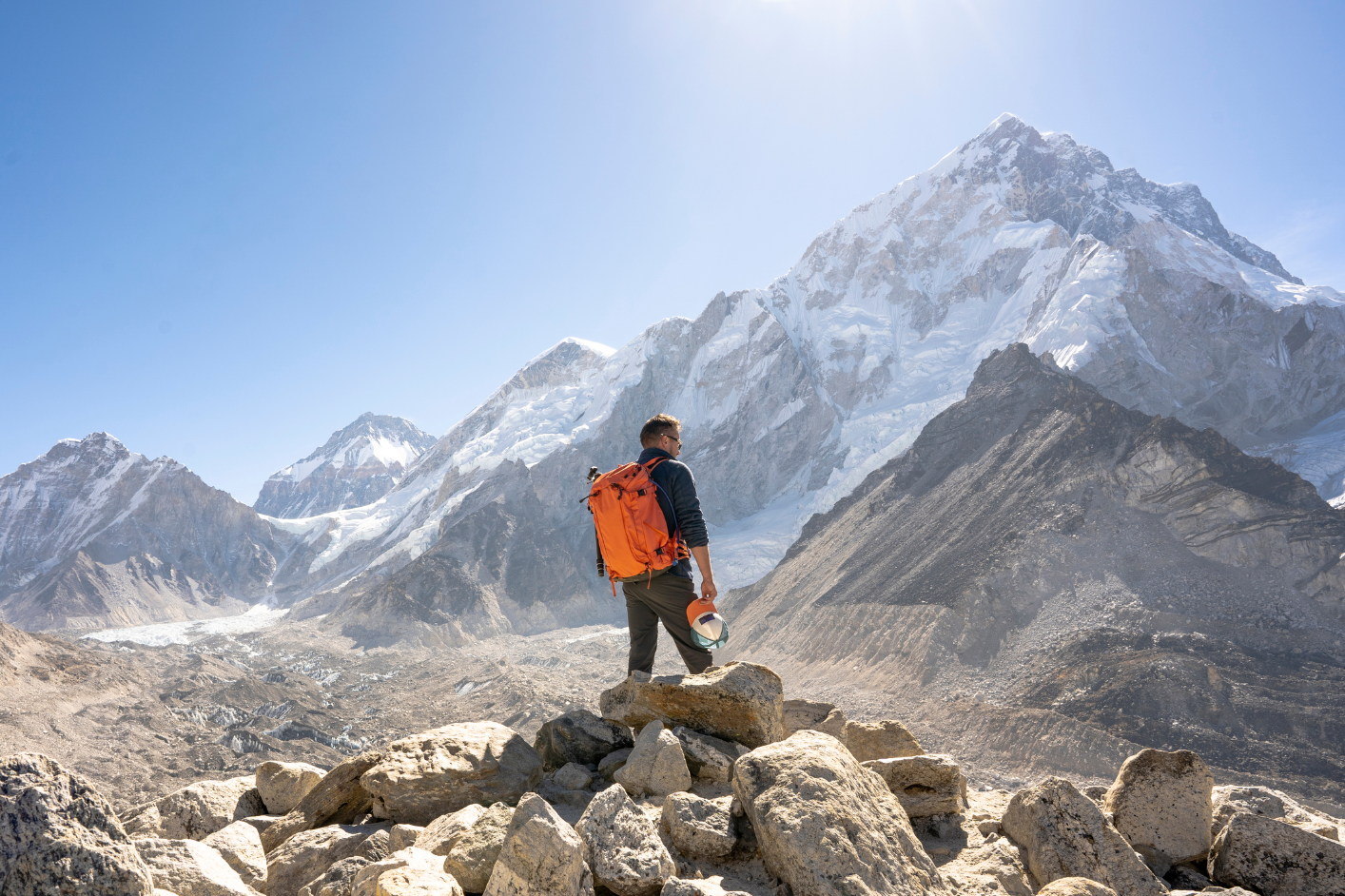
The big day. Early start through Gorak Shep (5,160m), the last settlement. Continue along the Khumbu Glacier moraine to Everest Base Camp (5,364m). During climbing season, you’ll see expedition tents and Sherpa teams preparing their ascent. The Khumbu Icefall towers above. Return to Gorak Shep for the night.
9Kala Patthar Sunrise & Descent to Pheriche
Pre-dawn start for Kala Patthar (5,545m), a classic viewpoint for Everest, Lhotse, Nuptse, and Pumori. Descend to Gorak Shep, then retrace the route through Lobuche and Dughla to Pheriche (about 4,240m). This is a long day; walking distance varies with the viewpoint reached and lodge location.
10Pheriche to Namche
Retrace through the Imja Valley to Tengboche, then descend to Namche. The lower altitude feels wonderful after days above 4,000m. Celebrate your accomplishment in Namche’s cafes and shops. The trail down is noticeably easier on the lungs.
11Namche to Lukla
Final trekking day. Descend through Monjo and the park checkpoint, cross the Dudh Koshi bridges one last time, and climb to Lukla. Celebrate your completion of the Everest Base Camp trek with your team with a well-earned feast and rest.
Alternative Itinerary
The itinerary shown has 11 days on the trail, including acclimatization days. Add trekking days for a slower pace or extra acclimatization; allow separate travel and flight-buffer days for Lukla access. To add the Gokyo lakes and Gokyo Ri, follow the link-up over Cho La when conditions permit; see our Gokyo Lakes guide for that route option. Starting from Jiri adds several days of walking; exact timing depends on the route and transport plan.
Route Map
Elevation Profile
Logistics & Support
Getting There and Back
Getting to the trailhead: Fly from Kathmandu to Lukla, or travel via Ramechhap when seasonal operations require it. Flights are weather-dependent; keep a buffer before the first walking day and check the departure airport with your airline or operator.
Returning from the trail: The walking itinerary ends in Lukla. Fly to Kathmandu when conditions allow and keep buffer days before onward international travel.
Accommodation
Teahouses line the entire route. They’re simple but cozy, locally run, with warm dining rooms and basic twin bedrooms. Hot showers, Wi-Fi, and device charging are available for small extra fees ($2-5 each).
Guides & Porters
Nepal Tourism Board lists Everest Base Camp among routes requiring a licensed guide and agency-issued TIMS. Confirm current procedures with your registered trekking agency. A guide helps with navigation, lodge arrangements, and decisions when altitude or weather changes the plan.
Permits
The route requires a Sagarmatha National Park entry permit, the Khumbu Pasang Lhamu Rural Municipality fee, and agency-issued TIMS under Nepal Tourism Board guidance:
- Sagarmatha National Park Entry Permit — NPR 3,000 for foreign visitors under the current Nepal Tourism Board fee table.
- Khumbu Pasang Lhamu Rural Municipality fee — confirm the current fee and collection point with your agency or the municipality.
- Agency-issued TIMS card — NPR 2,000 for non-SAARC trekkers under current Nepal Tourism Board guidance.
These are typically arranged by your trekking agency. Carry your passport and a few passport-sized photos.
High-altitude trekking and rescue insurance is strongly recommended. Check that your policy explicitly covers the elevations on your itinerary and emergency evacuation, and confirm exclusions with your insurer:
- Emergency helicopter evacuation and rescue up to 6,000m (20,000 ft)
- Hospitalization and treatment for Acute Mountain Sickness (AMS), HAPE, and HACE
- Trip cancellation and flight-delay coverage (Lukla flights are frequently weather-cancelled)
Permit counters do not universally require proof of insurance; carry your policy and emergency contact details for your own safety.
Budget
| Item | Cost |
|---|---|
| Permits | ~$45-50 |
| Guide | $25-40/day |
| Teahouse room | $3-8/night |
| Meals | $3-6/meal |
| Lukla flight (round trip) | $400-440 |
| Daily budget | $30-60/day |
Weather & Seasons
The best seasons are Spring (March-May) and Autumn (mid-September-November).
| Season | Conditions |
|---|---|
| Spring (Mar-May) | Mild temperatures, blooming rhododendrons, clear views |
| Autumn (Sep-Nov) | Stable, dry weather with crisp mountain views, peak trekking season |
| Winter (Dec-Feb) | Very cold (down to -20°C) but quiet trails and clear skies |
| Monsoon (Jun-Aug) | Rain, mud, flight delays, but lush landscapes and very few trekkers |
Pre-monsoon (March-May) offers warmer temperatures and rhododendron blooms. Post-monsoon (September-November) has the clearest skies and best mountain views. Winter treks are possible but extreme cold makes the high camps challenging.
Tips
- Budget for extra days. Lukla flights are notoriously delayed, sometimes by 3-5 days in peak season.
- Take acclimatization days seriously. AMS is a real risk above 3,500m. If you feel unwell, descend immediately.
- Book tea houses in advance during peak season (October-November).
- Carry cash. ATMs are rare beyond major towns and often don’t work. Budget $25-35/day for tea house trekking.
- Start slow. The first two days set the tone. Don’t push too hard before acclimatizing.
- Respect the culture. Remove shoes before entering monasteries, walk clockwise around chortens and mani walls.
- Pack light. Porters carry your bag, but keep it under 10 kg. Leave unnecessary gear in Kathmandu.
Frequently Asked Questions
Planning
When is the best time to do the Everest Base Camp trek?
The best seasons are Spring (March-May) for mild temperatures and blooming rhododendrons, and Autumn (September-November) for stable, dry weather and the clearest mountain views. Winter (December-February) is very cold (down to -20°C) but offers quiet trails, while monsoon (June-August) brings rain, mud, and flight delays.
How long does the Everest Base Camp trek take?
The walking itinerary shown has 11 days, including acclimatization stops. Many trekkers add route days for a gentler pace or extra rest. Flights to and from Lukla and weather-buffer days are additional; starting from Jiri adds several days of walking.
How much does the Everest Base Camp trek cost?
Budget $30-60 per day for teahouse trekking. Permits total approximately $50, guides cost $25-40/day, teahouse rooms are $3-8/night, meals are $3-6 each, and the Lukla flight costs $200-220 each way ($400-440 round trip). Carry cash — ATMs are rare beyond major towns and often don't work.
Do I need to book teahouses in advance?
Yes, especially during peak season (October-November) when demand is high. Booking ahead ensures you have a room after a long day of trekking. Your guide or trekking agency can handle reservations.
Difficulty & Fitness
How difficult is the Everest Base Camp trek?
The trek is considered challenging (hard) due to the high altitude reaching 5,545m at Kala Patthar, long walking days of 5-8 hours, and rugged mountain paths. Good physical fitness and previous trekking experience are strongly recommended. Preparation with regular cardio and hiking practice 2-3 months before the trip is ideal.
How far do you walk each day on the EBC trek?
Daily distances vary from 5 km on acclimatization days to 20 km on longer descent days. Most days fall between 10-14 km. The total round trip covers approximately 130 km (80 miles). Your porter carries the main bag (up to 10 kg) so you only need a daypack.
Do I need trekking poles for EBC?
Trekking poles are highly recommended. They reduce strain on your knees during steep descents (especially on the way down from Kala Patthar and the long descent to Lukla), improve balance on rocky sections, and help with river crossings on suspension bridges.
Permits & Budget
What permits do I need for the EBC trek?
Two local permits are required: a Sagarmatha National Park Entry Permit (currently NPR 3,000 for foreign visitors, obtained at the Monjo checkpoint or Nepal Tourism Board in Kathmandu) and a Khumbu Pasang Lhamu Rural Municipality Permit (collected in the Khumbu, commonly on arrival). These are typically arranged by your trekking agency. Confirm current fees before departure.
Is travel insurance necessary for EBC?
Travel insurance is strongly recommended. Check that your policy explicitly covers trekking at the elevations on your itinerary, emergency helicopter evacuation, and treatment for altitude-related illness. Confirm exclusions, rescue coordination, and any required documentation directly with your insurer; permit counters do not universally require proof of insurance.
Altitude & Safety
How do I prevent altitude sickness on the EBC trek?
Take acclimatization days seriously. The itinerary includes rest days in Namche Bazaar (Day 3) and Dingboche (Day 6). Follow the golden rule: climb high, sleep low. The hike to Nangkartsang Peak (5,083m) during the Dingboche acclimatization day helps your body adjust to altitude. If you experience severe headache, nausea, or confusion — descend immediately.
How high does the EBC trek go and can I handle the altitude?
The highest point is Kala Patthar at 5,545m (18,192 ft). Everest Base Camp sits at 5,364m (17,598 ft). The Lukla flight arrives at 2,840m (9,317 ft). Most healthy people can manage the altitude with proper acclimatization, but altitude affects everyone differently regardless of fitness. Diamox (acetazolamide) can help and is available with a doctor's prescription.
Is it safe to trek Everest Base Camp without a guide?
Nepal Tourism Board lists Everest Base Camp among routes requiring a licensed guide and agency-issued TIMS. Arrange a guide through a registered trekking agency and confirm current checkpoint procedures. You can trek privately with your guide rather than joining a group.
Logistics
What is the accommodation like on the EBC trek?
Teahouses line the entire route from Lukla to Gorak Shep. They are simple but cozy, family-run lodges with warm dining rooms heated by wood or yak-dung stoves. Bedrooms are basic twin rooms with thin mattresses and pillows. Hot showers, Wi-Fi, and device charging are available for small extra fees ($2-5 each). Earplugs are recommended for shared-wall noise.
What should I pack for the Everest Base Camp trek?
Essentials include an insulated down jacket (temperatures drop to -20°C), a four-season sleeping bag rated to -15°C, trekking poles, UV-protective sunglasses or glacier glasses, a headlamp with spare batteries, a hydration system with water purification tablets or a filter, a waterproof shell jacket and pants, thermal base layers, a warm hat, gloves, a buff, and SPF 50+ sunscreen with lip balm. Keep your porter bag under 10 kg.
How reliable are flights to Lukla?
Lukla flights are weather-dependent and notoriously delayed, sometimes by 3-5 days during peak season. Budget extra days in your itinerary. During the busiest months (October-November and March-April), flights may depart from Ramechhap instead of Kathmandu, requiring an early morning 4-5 hour drive. Always fly in the morning when weather is most stable.
What cultural customs should I be aware of?
The Khumbu region is deeply Buddhist. Remove your shoes before entering monasteries and always walk clockwise around chortens (stupas), mani walls (stone walls with inscribed prayers), and prayer wheels. Dress modestly in villages and religious sites. A simple 'Namaste' with palms together is the traditional greeting.