Gokyo Lakes
0 wishlisted0 done
Sign in to save this trek to your list.
Is This Trek for You?
Choose Gokyo if you want high-altitude lakes, broad Everest-region views, and a quieter alternative to the main Base Camp trail. It suits experienced walkers comfortable above 5,000m and with possible snow on the passes; it is not the best first trek for anyone who wants low-risk altitude or predictable weather.
Overview
The Gokyo Lakes trek is the best-kept secret of the Everest region. While most trekkers head to Base Camp, this route takes you to a chain of stunning turquoise glacial lakes, across the largest glacier in the Himalayas, and up Gokyo Ri (5,357m) for a panorama that many consider superior to the Everest Base Camp view.
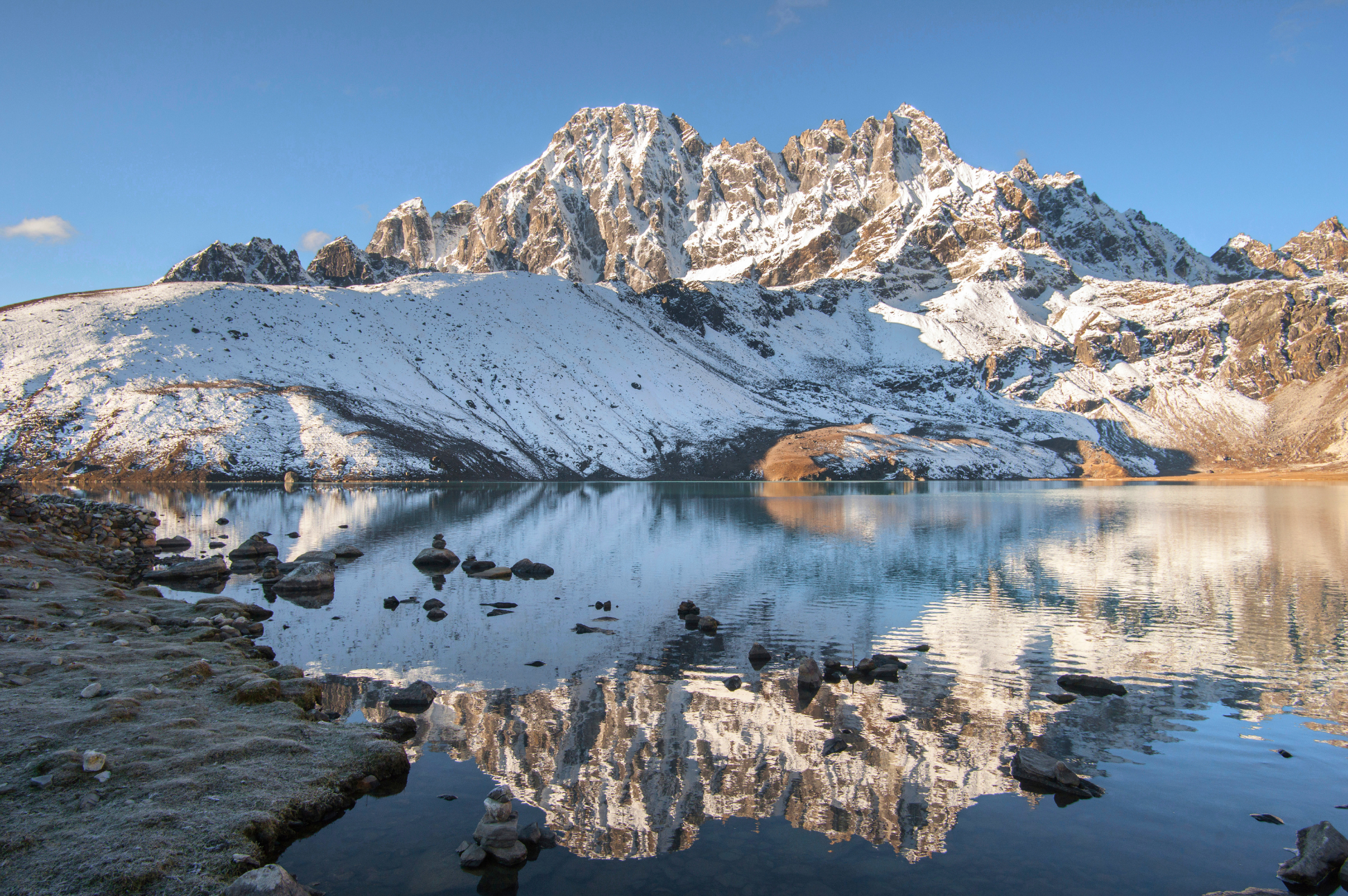
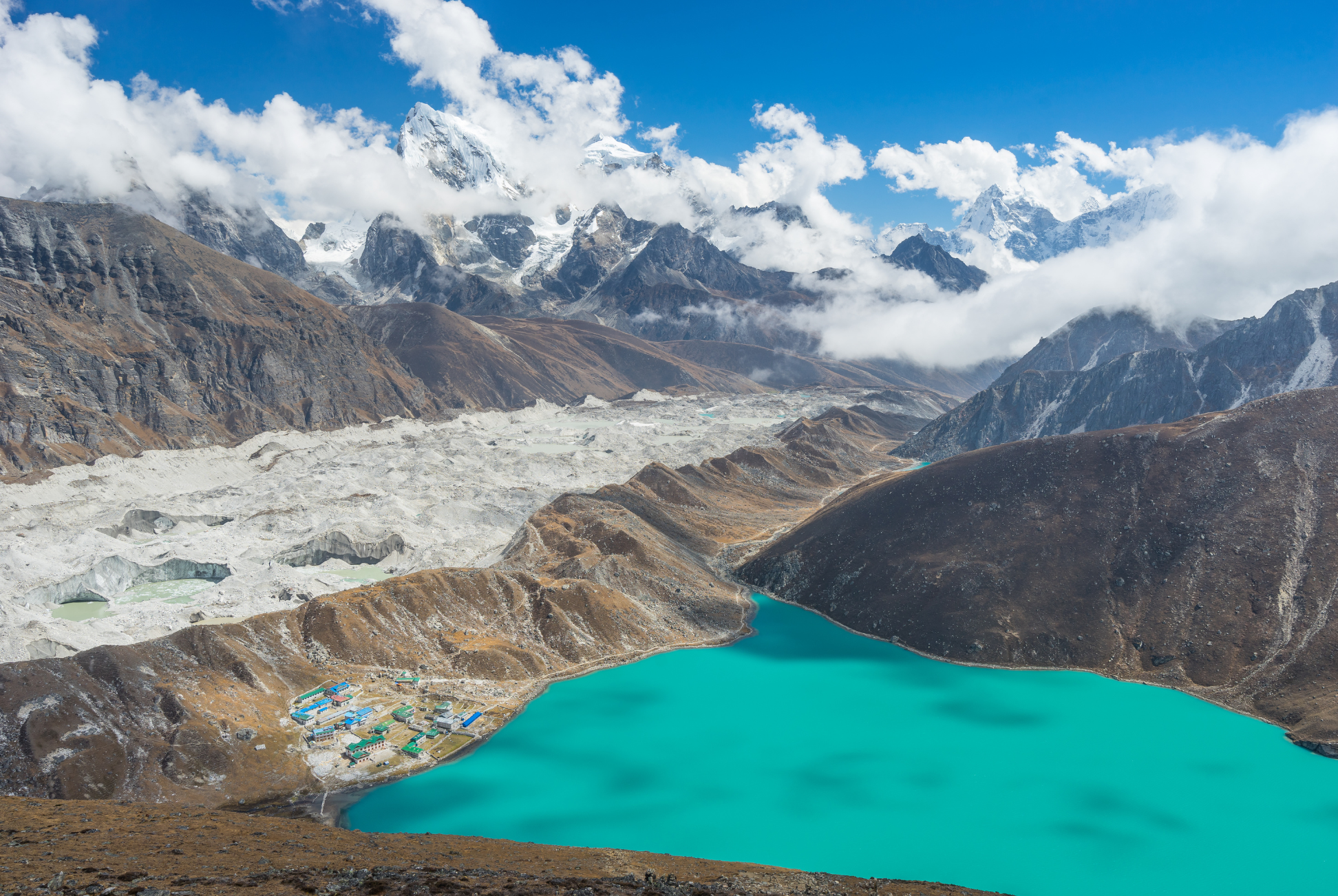
From the summit of Gokyo Ri, you can see four 8,000m peaks simultaneously: Everest, Lhotse, Makalu, and Cho Oyu. The lakes themselves — each a different shade of blue-green — sit at the edge of the Ngozumpa Glacier, a 36km river of ice that dwarfs anything you’ve seen. The five lakes are listed as a Ramsar Conservation Site, recognizing their international ecological importance.
The route branches off the main Everest Base Camp trail at Kyangjuma, heading into the quieter Gokyo valley. You’ll walk through Sherpa villages, yak pastures, and high-altitude forest before arriving at the glacier’s edge. The trail is less crowded than EBC, the cultural immersion is deeper, and the mountain views are arguably better — four 8,000m peaks from a single viewpoint is hard to beat.
Route & Key Stops
Lukla & Phakding: The Gateway
The trek begins with a dramatic 35-minute flight from Kathmandu to Lukla (2,840m) — one of the world’s most thrilling landings on a steep mountain airstrip. From Lukla, descend through Cheplung and Ghat along the Dudh Koshi river valley. The trail passes through pine forests and Sherpa villages to Phakding (2,640m), a quiet settlement on the glacier-fed river. The walk is gentle, allowing your body to begin adjusting to altitude.
Namche Bazaar: The Hub
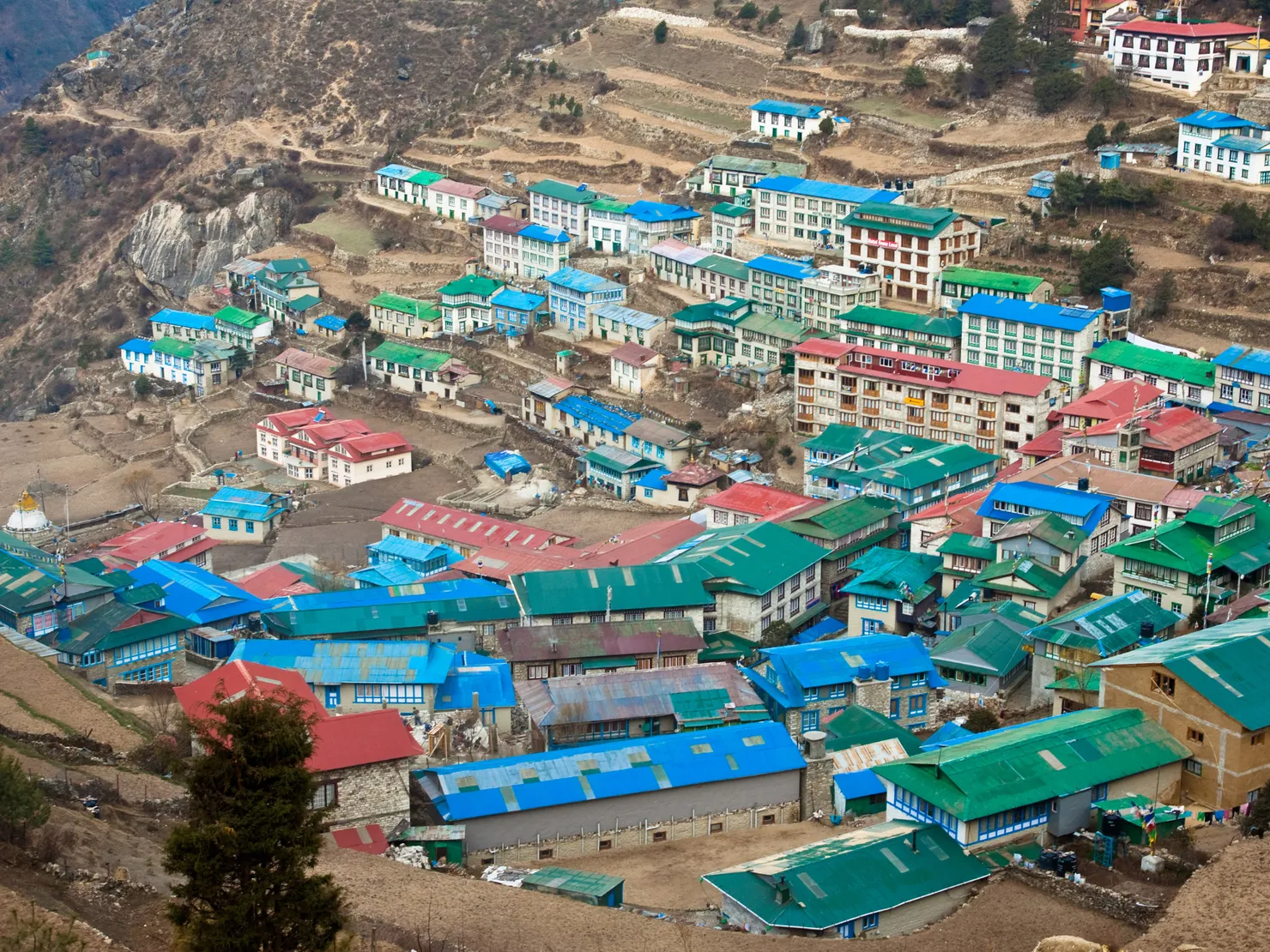
Namche Bazaar (3,440m) is the gateway to the Khumbu — a bustling mountain town with shops, cafes, bakeries, and your first views of Everest. The trail crosses multiple suspension bridges over the Dudh Koshi, passes the Sagarmatha National Park checkpoint at Monjo, and climbs steeply to Namche. This is your critical acclimatization stop.
The acclimatization day in Namche is essential. Hike to the Everest View Hotel (3,880m) for panoramic views of Everest, Lhotse, and Ama Dablam. Visit the Sherpa Culture Museum and Khumjung village — one of the largest authentic Sherpa settlements, with a Hillary school, Buddhist monastery, and traditional stone houses. Namche also has the last reliable ATMs and Wi-Fi before the trail goes remote.
Dole: Where the Trail Splits
At Kyangjuma, the Gokyo trail diverges from the main EBC route, heading northwest into the Gokyo valley. The path climbs through rhododendron and birch forest to Phortse Tenga, then continues to Dole (4,110m) — a quiet settlement in a sheltered valley. The forest here transitions from deciduous to alpine, with juniper and conifer trees replacing rhododendrons. Spring brings wildflowers in full bloom. Dole has views of Khumbila and Tawache (6,542m).
Machhermo: The High Pastures
Machhermo (4,470m) sits in the upper Gokyo valley surrounded by yak pastures and alpine scrub. The trail follows the terminal moraine of the Ngozumpa Glacier with views of Cho Oyu (8,188m) and Kangtega. Machhermo has a high-altitude rescue post — the site of a famous yeti encounter in 1974. The valley narrows here, with the glacier’s lateral moraine visible on the right.
Gokyo: The Turquoise Heart
Gokyo (4,790m) is a small hamlet on the shore of the stunning third lake (Dudh Pokhari) — vivid turquoise water against the white glacier. The Ngozumpa Glacier stretches north to the Tibetan border, a vast expanse of ice and moraine. The first and second lakes are passed along the trail; the fourth and fifth lakes lie above the settlement, reachable on a day hike. All five lakes are connected underground and are sacred to the Sherpa people, who worship them annually.
Gokyo Ri: The Summit Viewpoint
Gokyo Ri (5,357m) is the trek’s climax — a steep 1-1.5 hour climb from Gokyo to a stone cairn at the summit. The panorama includes four 8,000m peaks: Everest (8,849m), Lhotse (8,516m), Makalu (8,485m), and Cho Oyu (8,188m), plus dozens of lesser peaks. Many trekkers consider this view superior to Kala Patthar (the EBC viewpoint) because you see the mountains from a different angle with less obstruction. Sunrise and sunset are equally spectacular.
Fifth Lake: The Unique Everest View
Most trekkers stop at the third lake, but the fifth lake (Thonak Tsho) offers what many describe as the best view of Everest on any trek. The angle from the fifth lake shows Everest’s full pyramid without the Lhotse-Nuptse wall obscuring it — a rare perspective. The hike from Gokyo to the fifth lake takes 2-3 hours each way across glacial moraine.
Itinerary
1Lukla to Phakding
Begin walking from Lukla (2,840m). Descend through Cheplung and Ghat along the Dudh Koshi river valley. Gentle trail through pine forests and Sherpa villages to Phakding (2,640m).
2Phakding to Namche Bazaar
Cross multiple suspension bridges over the Dudh Koshi. Pass through Monjo (Sagarmatha National Park checkpoint). The final steep climb delivers you to Namche Bazaar — the bustling gateway to the Khumbu with shops, cafes, and your first Everest views.
3Acclimatization in Namche
Essential rest day. Hike to the Everest View Hotel (3,880m) for panoramic views of Everest, Lhotse, and Ama Dablam. Visit the Sherpa Culture Museum and Khumjung village — one of the largest authentic Sherpa settlements. Return to Namche for the night.
4Namche to Dole
Leave the main EBC trail at Kyangjuma and head northwest into the Gokyo valley. Climb through rhododendron and birch forest to Phortse Tenga, then continue to Dole — a quiet settlement in a sheltered valley with views of Khumbila and Tawache.
5Dole to Machhermo
Walk through yak pastures with views of Cho Oyu (8,188m) and Kangtega. The trail follows the terminal moraine of the Ngozumpa Glacier. Machhermo has a high-altitude rescue post and is the site of a famous yeti encounter.
6Machhermo to Gokyo
Continue along the glacier moraine past the first and second Gokyo lakes. Arrive at Gokyo on the shore of the stunning third lake — vivid turquoise water against the white glacier. The Ngozumpa Glacier stretches north to the Tibetan border.
7Gokyo Ri & Upper Lakes
Pre-dawn climb of Gokyo Ri (5,357m) for sunrise over four 8,000m peaks: Everest, Lhotse, Makalu, and Cho Oyu. Afternoon, trek to the fourth and fifth lakes for even more spectacular glacial scenery. Many consider this view superior to Kala Patthar.
8Gokyo to Dole
Retrace steps down the valley. The descent is faster at lower altitude. Pass the lakes and yak pastures back to Dole. Enjoy the warmer temperatures and thicker air.
9Dole to Namche
Continue descent through Phortse Tenga and the rhododendron forest back to Namche. The trail rejoins the main EBC route. Final night in Namche — time for a celebration dinner.
10Namche to Lukla
Final trekking day. Descend through Monjo, the park checkpoint, and the Dudh Koshi crossings one last time. Climb to Lukla for the completion of the Gokyo Lakes trek.
Alternative Itineraries
The itinerary shown has 10 days on foot from Lukla, including the Namche acclimatization day. Add trekking days for a slower pace, extra rest or side trips; Lukla flights are separate:
- Cho La Pass extension (+3-4 days): Cross the Cho La pass (5,420m) to join the EBC trail at Dzongla. This creates an incredible loop combining both Gokyo and EBC in one trek. The pass is technical and requires good fitness.
- Renjo La Pass (+2 days): Cross Renjo La (5,360m) from Gokyo to reach Thame and the western Khumbu. Fewer trekkers and exceptional mountain views.
- Three Passes Trek (+5-7 days): Cross Renjo La, Cho La and Kongma La for a longer circuit of the Everest region. See our Everest Three Passes guide for the full itinerary and current-condition caveats.
- Shorter itinerary (8-9 days): Skip the acclimatization day in Namche if you’ve recently been at altitude, or combine Dole-Machhermo-Gokyo into two days.
Route Map
Elevation Profile
Logistics & Support
Accommodation
Teahouses line the entire route — simple but comfortable lodges run by Sherpa families. Twin beds, shared bathrooms, and dining rooms with wood-burning stoves. Hot showers and Wi-Fi available in Namche and Lukla; limited or unavailable above Dole. Gokyo has basic teahouses with stunning lake views. Expect to pay for Wi-Fi and charging (NPR 500-700 per GB of Wi-Fi).
Guides & Porters
Nepal Tourism Board lists Gokyo among routes requiring a licensed guide and agency-issued TIMS. Arrange a guide through a registered trekking agency and confirm current checkpoint procedures. A local guide can help with navigation, altitude decisions, and changing trail conditions.
Permits
The required documents and fees are:
- Sagarmatha National Park Entry Permit: NPR 3,000 for foreign visitors under the current Nepal Tourism Board fee table.
- Khumbu Pasang Lhamu Rural Municipality fee: confirm the current fee with your agency or the municipality before departure.
- Agency-issued TIMS card: NPR 2,000 for non-SAARC trekkers under the current Nepal Tourism Board schedule.
Carry the required documents throughout the trek. Confirm where each fee is collected with your registered agency; checkpoint procedures can change.
Budget
| Item | Cost |
|---|---|
| Permits | ~$45 |
| Guide | $30-50/day |
| Teahouse room | $5-15/night |
| Meals | $5-10/meal |
| Kathmandu-Lukla flight | $150-180 (one way) |
| Daily budget | $40-70/day |
Getting There and Back
Getting to the trailhead: Fly from Kathmandu to Lukla (Tenzing-Hillary Airport). During some peak-season periods, flights may depart from Ramechhap instead; confirm the airport and transfer plan before travel. Keep a buffer for weather delays.
Returning from the trail: The walking itinerary ends in Lukla. Fly back to Kathmandu when conditions allow and leave buffer days before onward travel.
Weather & Seasons
The best seasons are Autumn (September-November) and Spring (March-May).
| Season | Conditions |
|---|---|
| Autumn (Sep-Nov) | Clearest skies, stable weather, peak season — expect crowds at Namche and Lukla |
| Spring (Mar-May) | Warming temperatures, rhododendron blooms at lower elevations, some haze |
| Winter (Dec-Feb) | Extremely cold at Gokyo (-20°C at night), heavy snow, trails may be blocked |
| Monsoon (Jun-Aug) | Heavy rain, obscured views, slippery trails — not recommended |
Autumn offers the most reliable weather and clearest mountain views. Spring is warmer but hazier. Winter treks are possible but demanding — Gokyo temperatures drop well below freezing and snow can block the Gokyo Ri climb. Monsoon makes the trail muddy and the mountains invisible.
Tips
- Climb Gokyo Ri at sunrise. The four 8,000m peak view is best at first light, and you’ll beat the crowds.
- Walk to the Fifth Lake. Most people stop at the third, but the upper lakes are even more spectacular and the Everest view from the fifth lake is unique.
- Consider the Cho La pass. If you’re fit, crossing to EBC makes an incredible loop that combines both iconic routes.
- Less crowded than EBC. Enjoy the solitude, especially at Gokyo where there are fewer trekkers than at Gorak Shep.
- Build buffer days for flights. Lukla flights are frequently delayed or cancelled due to weather; don’t book international flights the day after your return.
- Acclimatize properly. The acclimatization day in Namche is not optional; Dole and Machhermo are at significant altitude.
- Bring cash. Wi-Fi, hot showers, and charging all cost extra above Namche; NPR 500-700 per GB of Wi-Fi.
- Try Sherpa stew - a warming, filling local dish perfect for cold evenings at altitude.
Frequently Asked Questions
Planning
When is the best time to go?
The best seasons are Spring (March-May) and Autumn (September-November). Autumn offers the clearest skies for lake views and mountain panoramas. Spring brings rhododendron blooms on the lower trails.
How many days do I need?
The itinerary shown has 10 days on foot, including acclimatization. Allow additional days for travel to and from Lukla, weather buffers and any extra rest or side trips.
Can I combine this with the Everest Base Camp trek?
Yes. The Cho La crossing links Gokyo with the Everest Base Camp route, making a longer loop possible. Allow several extra days and treat the high pass as weather-dependent. See our Everest Base Camp guide for the standard route and acclimatization plan.
Do I need to fly to Lukla?
Yes, the flight from Kathmandu to Lukla (2,840m) is the standard starting point. Alternatively, you can take a jeep to Salleri and trek in from the road head, adding 3-4 days.
Difficulty & Altitude
How hard is the trek?
Moderate to challenging. The trails are well-maintained but the altitude is the real challenge. You'll be above 4,500m for several days. Prior high-altitude trekking experience is recommended.
What about altitude sickness?
The itinerary includes a rest day in Namche Bazaar for acclimatization. Ascend gradually, stay hydrated, and don't push through symptoms. Gokyo Ri at 5,357m is a significant altitude gain.
Do I need technical climbing skills?
No technical skills are required. The trails are well-established. Gokyo Ri is a steep but non-technical hike that takes 3-4 hours from the lake. All lake visits are on flat terrain.
Permits & Costs
What permits do I need?
You need the Sagarmatha National Park entry permit, a Khumbu Pasang Lhamu Rural Municipality fee, and the agency-issued TIMS card required for the Gokyo route. Your registered trekking agency normally arranges these.
How much does it cost?
Budget $1,200-2,500 per person for a guided trek, depending on lodge standards and group size. Independent trekking is cheaper but not recommended at this altitude.
Route & Navigation
Is a guide required?
Yes. Gokyo is among the routes covered by Nepal's current guide and agency-issued TIMS requirements. Arrange a licensed guide through a registered trekking agency.
What is the accommodation like?
Tea houses (basic lodges) line the entire route. Rooms are simple with twin beds and blankets. Facilities decrease as you gain altitude. Bring a sleeping bag rated to -10°C.
Is the trail crowded?
Less crowded than the main EBC trail. The Gokyo route splits from the standard EBC path after Namche, so you'll have a more peaceful experience, especially beyond Machhermo.
Best Views & Highlights
What makes Gokyo different from EBC?
Gokyo offers turquoise glacial lakes, the massive Ngozumpa Glacier (the largest in Nepal), and views from Gokyo Ri that many trekkers consider superior to Kala Patthar. You see four 8,000m peaks from a single viewpoint.
Is Gokyo Ri worth the early start?
Absolutely. The pre-dawn climb to 5,357m rewards you with sunrise views of Everest, Lhotse, Makalu, and Cho Oyu. On clear mornings, the sight of the sun hitting the turquoise lakes below is unforgettable.