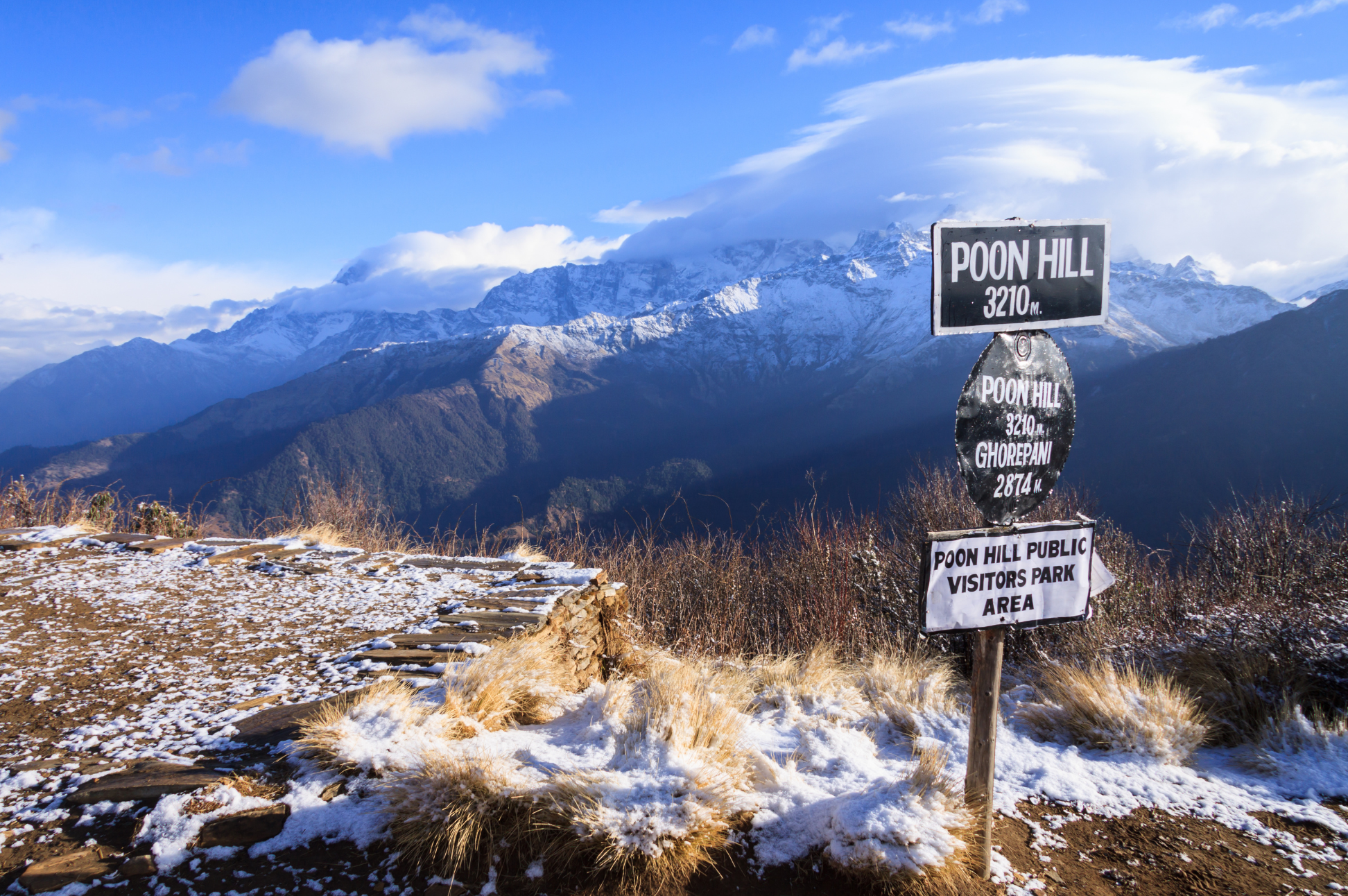
Poon Hill
0 wishlisted0 done
Sign in to save this trek to your list.
Is This Trek for You?
Choose Poon Hill if you want a short introduction to Nepal with comfortable teahouses, village culture, and a famous sunrise without extreme altitude. It suits first-time trekkers and families with reasonable fitness, though the stone steps are tiring and the popular viewpoint can be busy in peak season.
Overview
Poon Hill is the perfect introduction to trekking in Nepal. In just 4-5 days, you’ll climb through rhododendron forests, stay in charming Gurung villages, and witness one of the most celebrated sunrises in the Himalayas.
From the top of Poon Hill (3,210m), you’ll see a panorama stretching from Dhaulagiri (8,167m) in the west to Machapuchare (6,993m) in the east, with the full Annapurna range filling the horizon. It’s a view that has launched a thousand dreams.
The trek begins in Nayapul, a short drive from Pokhara, and follows the Modi Khola river through rice terraces and Gurung villages. The route climbs through oak and rhododendron forest to Ghorepani, a ridge-top village with panoramic mountain views, before making the pre-dawn ascent to Poon Hill for sunrise. The descent loops through Tadapani and Ghandruk, two of the most picturesque Gurung settlements in the Annapurna region, before returning to Nayapul.
The trail is well-maintained and heavily trafficked, making it a popular first trek. Check the current guide and permit requirements for your exact route before setting out. Tea houses line the route, offering warm beds and hot meals; camping gear is not needed, but bring a sleeping bag and warm layers.
Route & Key Stops
Nayapul & Birethanti
The trek traditionally began at Nayapul (1,070m), though road access and common starting points change; many itineraries now use a roadhead closer to Tikhedhunga or Ulleri. The trail passes through Birethanti, where conservation-area documentation may be checked. Confirm the exact roadhead and current checkpoint process locally.
Tikhedhunga & Ulleri
The trail follows the Bhurungdi Khola river through rice terraces and small settlements to Tikhedhunga (1,540m). From here begins the legendary Ulleri staircase, approximately 3,300 stone steps climbing 500m in elevation. It’s a steep, relentless ascent through Magar villages and farmland. At the top sits Ulleri (2,070m), a Magar village with views of Annapurna South and Himchuli. Many trekkers overnight here rather than Tikhedhunga.
Banthanti & Nangethanti: The Forest Traverse
From Ulleri, the trail climbs through dense oak and rhododendron forest to Banthanti (2,250m), a small settlement with mountain glimpses through the trees. Continuing through the forest past waterfalls, you reach Nangethanti (2,450m), a rest stop with tea houses. During spring (March-April), the rhododendron forest explodes in red, pink, and white blooms, Nepal’s national flower at its most spectacular.
Ghorepani: The Ridge Village
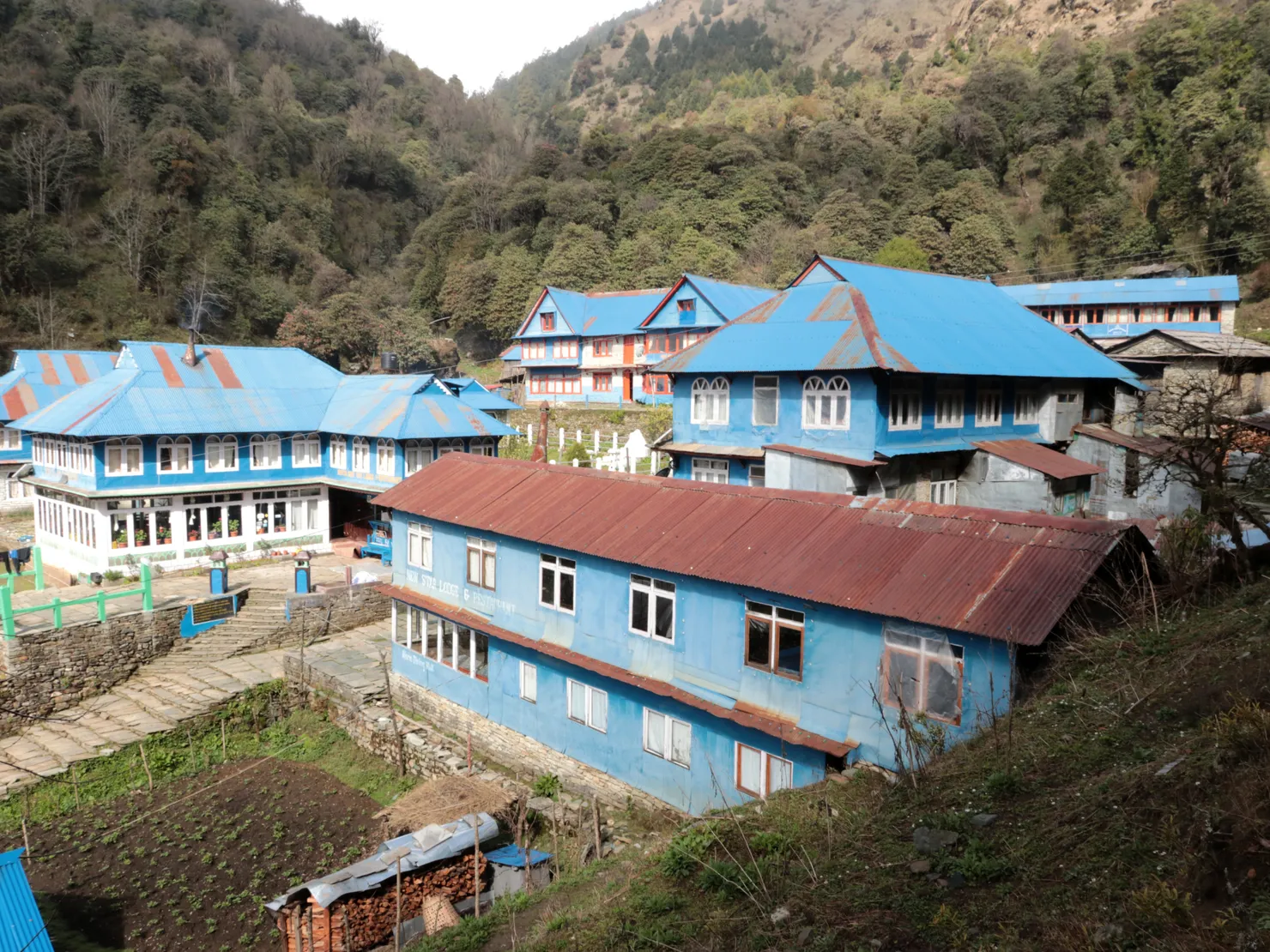
Ghorepani (2,860m) sits on a ridge with panoramic views of Dhaulagiri, Annapurna South, and Machapuchare. It’s a larger village with multiple tea houses, bakeries, and a lively evening atmosphere. Ghorepani is the base for the Poon Hill sunrise hike and a cultural hub where Gurung and Magar communities coexist. The village is known for its traditional homestays and local hospitality.
Poon Hill: The Viewpoint
Poon Hill (3,210m) is the trek’s climax, a pre-dawn 45-minute climb from Ghorepani to a stone tower with 360-degree Himalayan views. At sunrise, the panorama includes Dhaulagiri (8,167m), Tukuche Peak (6,920m), Annapurna South (7,219m), Annapurna I (8,091m), Machapuchare (6,993m), and the entire Annapurna range. A small entrance fee may apply at the viewpoint. The descent to Ghorepani takes 20-30 minutes.
Tadapani
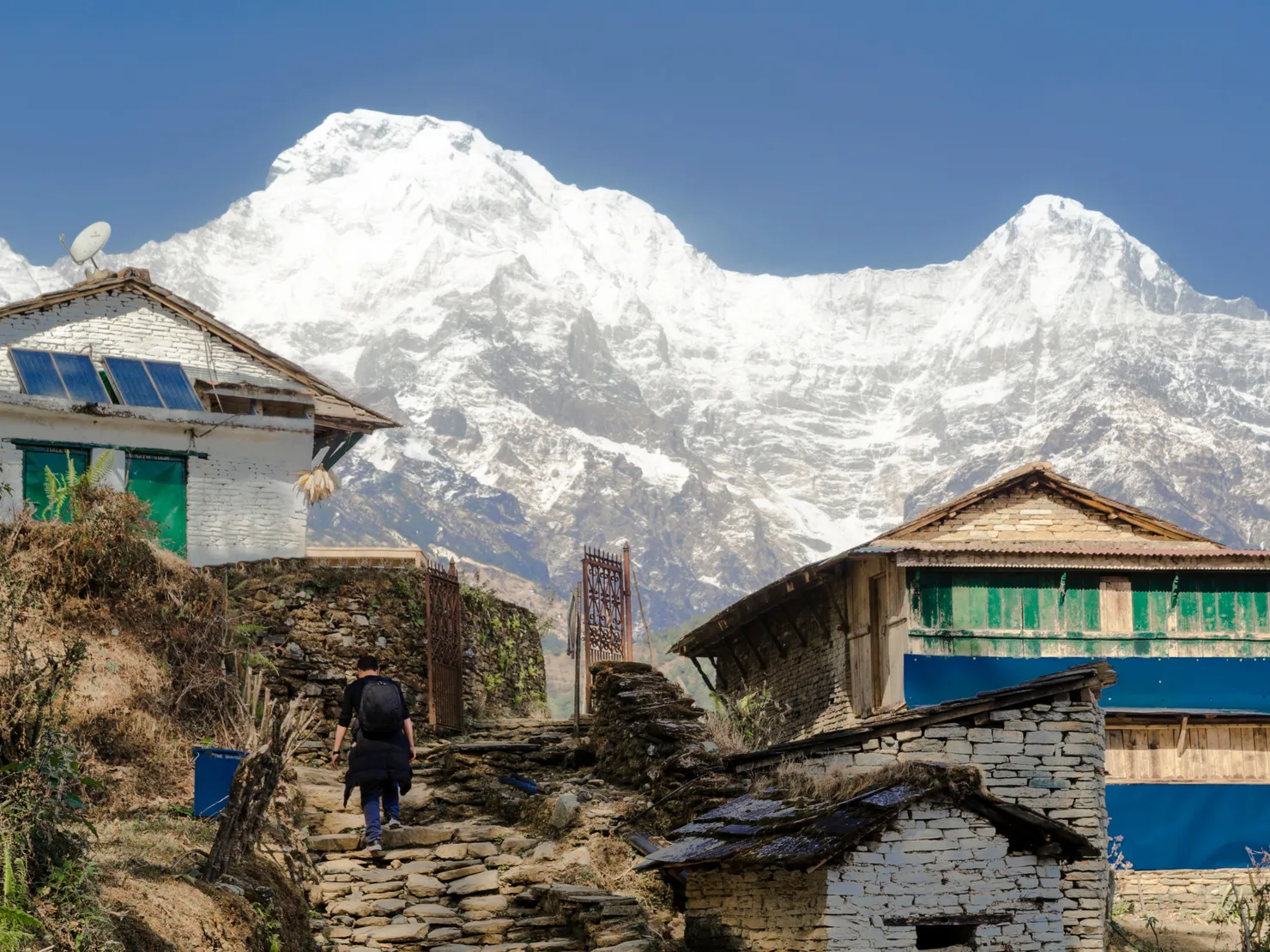
After Poon Hill sunrise, the trail descends through rhododendron forest to Tadapani (2,630m). This is a quieter alternative to Ghorepani, with close-up views of Annapurna South and Machapuchare. The forest trail is beautiful in any season with dense canopy, birdsong, and occasional monkey sightings. Tadapani is a good place to rest and absorb the mountain views before the final descent.
Ghandruk: The Gurung Village
Ghandruk (1,940m) is one of the largest and most traditional Gurung villages in the Annapurna region. The stone houses, narrow lanes, and terraced slopes create a timeless atmosphere. Visit the Gurung Cultural Museum, explore the monastery, and enjoy the close-up views of Annapurna South and Machapuchare. Ghandruk is the cultural heart of the trek; Gurung traditions, architecture, and hospitality are on full display here.
Nayapul
The final descent from Ghandruk passes through rice terraces, riverside villages, and farmland before reaching Nayapul (1,070m). The trail follows the Modi Khola and passes through Birethanti (permit check on exit). This is the end of the walking itinerary.
Itinerary
1Nayapul to Tikhedhunga
Walk from Nayapul through Birethanti (permit check) and along the Modi Khola river through rice terraces and Gurung villages. Pass through Hile and reach Tikhedhunga (1,540m), the base of the famous Ulleri climb.
2Tikhedhunga to Ghorepani
The hardest day. Climb the legendary 3,300 stone steps of Ulleri, a steep, relentless ascent through Magar villages. Continue through oak and rhododendron forest to Banthanti and Nangethanti. Arrive at Ghorepani (2,860m), a ridge-top village with panoramic views of Dhaulagiri, Annapurna South, and Machapuchare.
3Poon Hill Sunrise & Tadapani
Pre-dawn 45-minute climb to Poon Hill (3,210m) for sunrise. Watch Dhaulagiri, Annapurna South, Machapuchare, and the entire range glow in golden light. Return to Ghorepani for breakfast, then trek through rhododendron forest to Tadapani (2,630m).
4Tadapani to Ghandruk
Descend through beautiful rhododendron and bamboo forest. Stunning close-up views of Annapurna South and Machapuchare. Arrive at Ghandruk (1,940m), a large Gurung village with traditional stone houses and a cultural museum.
5Ghandruk to Nayapul
Final descent through rice terraces and villages to Nayapul, where the walking itinerary ends.
Alternative Itineraries
The itinerary shown has 5 days on foot. Shorter and longer route variants are possible; allow separate time for travel between Pokhara and Nayapul:
- 3-day express: Skip Ghandruk and descend from Tadapani directly to Nayapul on Day 3. Long days but feasible for fit trekkers.
- 6-day relaxed: Add an acclimatization day in Ghorepani or Tadapani. Some itineraries split the Ghorepani-Ghandruk descent over two days.
- Khopra Ridge extension: Add about 2 days to visit Khopra Danda (3,660m) for quieter views of Dhaulagiri and the Kali Gandaki valley. It is a separate route; check local trail connections before planning a combined itinerary.
- Jhinu Danda hot springs: Detour from Ghandruk to natural hot springs on the Modi Khola river. Adds 1 day.
Route Map
Elevation Profile
Logistics & Support
Getting There and Back
Getting to the trailhead: Travel from Kathmandu to Pokhara by road or air, then take a vehicle about 1.5 hours to Nayapul.
Returning from the trail: Arrange a vehicle from Nayapul back to Pokhara after Day 5. Allow a buffer before onward flights or other fixed connections.
Accommodation
Teahouses line the entire route. They are simple but comfortable lodges run by local Gurung and Magar families. Twin beds, shared bathrooms, and warm dining rooms with wood-burning stoves. Hot showers and Wi-Fi available in lower villages; limited above 2,500m. Ghorepani and Ghandrek have slightly better facilities and bakeries.
Guides & Porters
Nepal Tourism Board’s published mandatory-guide list names the combined Poon Hill–ABC trek. Because this page describes Poon Hill alone, confirm with a registered agency whether the requirement applies to your exact itinerary and current local enforcement. Porters are optional and useful for carrying a main bag.
Permits
Two permits are required:
- Annapurna Conservation Area entry permit: Nepal Tourism Board currently lists NPR 3,000 for foreign visitors and NPR 1,000 for SAARC visitors.
- Agency-issued TIMS card: NPR 2,000 for non-SAARC trekkers where required; Nepal Tourism Board specifically lists the combined Poon Hill–ABC route.
Carry permits and passport details throughout the trek. Arrange required documents before leaving Pokhara or Kathmandu; checkpoint procedures can change.
Budget
| Item | Cost |
|---|---|
| Permits | ~$45 |
| Guide | $25-40/day |
| Teahouse room | $3-8/night |
| Meals | $3-6/meal |
| Pokhara-Nayapul transport | $10-15 |
| Daily budget | $25-45/day |
Weather & Seasons
The best seasons are Autumn (October-November) and Spring (February-May).
| Season | Conditions |
|---|---|
| Autumn (Oct-Nov) | Clearest mountain views, stable weather, peak season, expect crowds |
| Spring (Feb-May) | Rhododendron blooms (March-April), warming temperatures, some haze |
| Winter (Dec-Jan) | Clear skies but cold at Ghorepani (-5°C to 5°C), possible snow on Poon Hill |
| Monsoon (Jun-Sep) | Heavy rain, muddy trails, obscured views, not recommended |
Autumn offers the most reliable weather and clearest mountain views. Spring brings spectacular rhododendron blooms and the forest between Ghorepani and Tadapani turns into a canopy of red, pink, and white. Winter is possible but cold; snow can block the Poon Hill climb. Monsoon makes the trail muddy and the mountains invisible.
Tips
- Start the Poon Hill climb at 4:30am. You want to reach the top before sunrise (usually 5:30-6:00am depending on season).
- Bring warm layers for the sunrise. It’s bitterly cold at 3,210m before the sun comes up, even in autumn.
- Best in October/November. We get the clearest views of the year, but it is also the busiest.
- Consider the Ulleri overnight. Splitting Day 1-2 into two days makes the famous staircase less grueling.
- Carry cash. Tea houses don’t accept cards, and you’ll want money for hot drinks and snacks.
- Respect the culture. Remove shoes before entering monasteries, ask before photographing locals.
- Book tea houses in peak season. Ghorepani fills up in October/November; consider arriving by mid-afternoon.
- Try dal bhat. The Nepali staple is filling, nutritious, and comes with free refills at tea houses.
Frequently Asked Questions
Planning
When is the best time to go?
The best seasons are Spring (March-May) and Autumn (September-November). Autumn offers the clearest mountain views. Spring brings rhododendron blooms. Monsoon season (June-September) brings leeches and obscured views.
How many days do I need?
The itinerary shown has 5 days on foot. Shorter or longer route variants are possible; the drive between Pokhara and Nayapul is separate.
Is this trek suitable for beginners?
Yes, Poon Hill is one of Nepal's best introductory treks. The trails are well-marked, teahouses are comfortable, and the altitude is manageable for most people. It's a great introduction to Himalayan trekking.
Can I do this trek independently?
Nepal Tourism Board lists the combined Poon Hill–ABC route among those requiring a licensed guide and agency-issued TIMS. If you are trekking the shorter Poon Hill-only route, confirm the current requirement with a registered agency before departure.
Difficulty & Altitude
How hard is the trek?
Easy to moderate. The main challenge is the steep stone staircase from Tikhedhunga to Ulleri (about 3,000 steps). The rest of the trail is relatively gentle. Good fitness helps but isn't essential.
What about altitude sickness?
The maximum altitude is 3,210m (Poon Hill), which is relatively low. Most people don't experience altitude sickness on this trek. The gradual ascent over 3 days helps with acclimatization.
Do I need technical climbing skills?
No technical skills are required. The trails are well-established and non-technical. Good walking fitness is sufficient. The terrain is mostly stone steps, forest paths, and ridgeline trails.
Permits & Costs
What permits do I need?
You need an Annapurna Conservation Area entry permit. The guide and agency-issued TIMS requirement applies to the Poon Hill–ABC route listed by Nepal Tourism Board; confirm whether your specific Poon Hill-only itinerary is registered under that route. Arrange permits before setting out rather than relying on a trailhead counter.
How much does it cost?
Budget varies with season, transport, guide service, and comfort level. The current Nepal Tourism Board fee table lists ACAP entry at NPR 3,000 for foreign visitors and NPR 1,000 for SAARC visitors; a TIMS card, where required, is an additional NPR 2,000 for non-SAARC trekkers. Confirm current fees and inclusions with your agency.
Route & Navigation
Is a guide required?
Nepal Tourism Board lists the combined Poon Hill–ABC route among routes requiring a licensed guide and agency-issued TIMS. For the shorter Poon Hill-only itinerary, verify the current rule and required paperwork with a registered agency.
What is the accommodation like?
Comfortable teahouses with twin beds, blankets, and attached bathrooms at lower elevations. Facilities are better than higher altitude treks. Hot showers and Wi-Fi available at most stops.
Is the trail crowded?
Moderate traffic. Poon Hill is popular, so you'll see other trekkers, especially at sunrise viewpoint. The Ghandruk and Ghorepani villages are lively but not overcrowded. Autumn weekends are busiest.
Best Views & Highlights
What will I see from Poon Hill?
Poon Hill offers panoramic views of Dhaulagiri (8,167m), Annapurna South, Annapurna I, Machhapuchhre (Fishtail), and the Annapurna range. The sunrise view is one of Nepal's most photographed.
What makes this trek special?
Poon Hill combines stunning mountain views with lush rhododendron forests, traditional Gurung villages, and hot springs. It's the perfect short trek for experiencing the best of the Annapurna region.